

Quick Answer
A standard modern piano keyboard has 88 keys. That means 52 white keys and 36 black keys. Smaller keyboards often have 61 or 76 keys.
Introduction
I’m Daniel Brooks. I test keyboards in real rooms. I use them at home, in lessons, and on small gigs. New players ask this question all the time. They see one keyboard with 61 keys. Then they see another with 88. The gap feels confusing fast.
The short answer helps. The full answer helps more. Key count changes what you can play. It shapes hand space, song range, and long-term value. A tiny board may feel fine at first. A few months later, it may feel limiting.
This guide will show the count, the layout, the history, and the best keyboard size for your goals.
Key Takeaways
- 88 keys is the modern piano standard.
- A full piano has 52 white keys.
- A full piano has 36 black keys.
- Many beginner keyboards use 61 keys.
- Many mid-size stage keyboards use 76 keys.
- Serious piano study fits best on 88 keys.
Basic Explanation: What Is the Standard Number of Piano Keys?
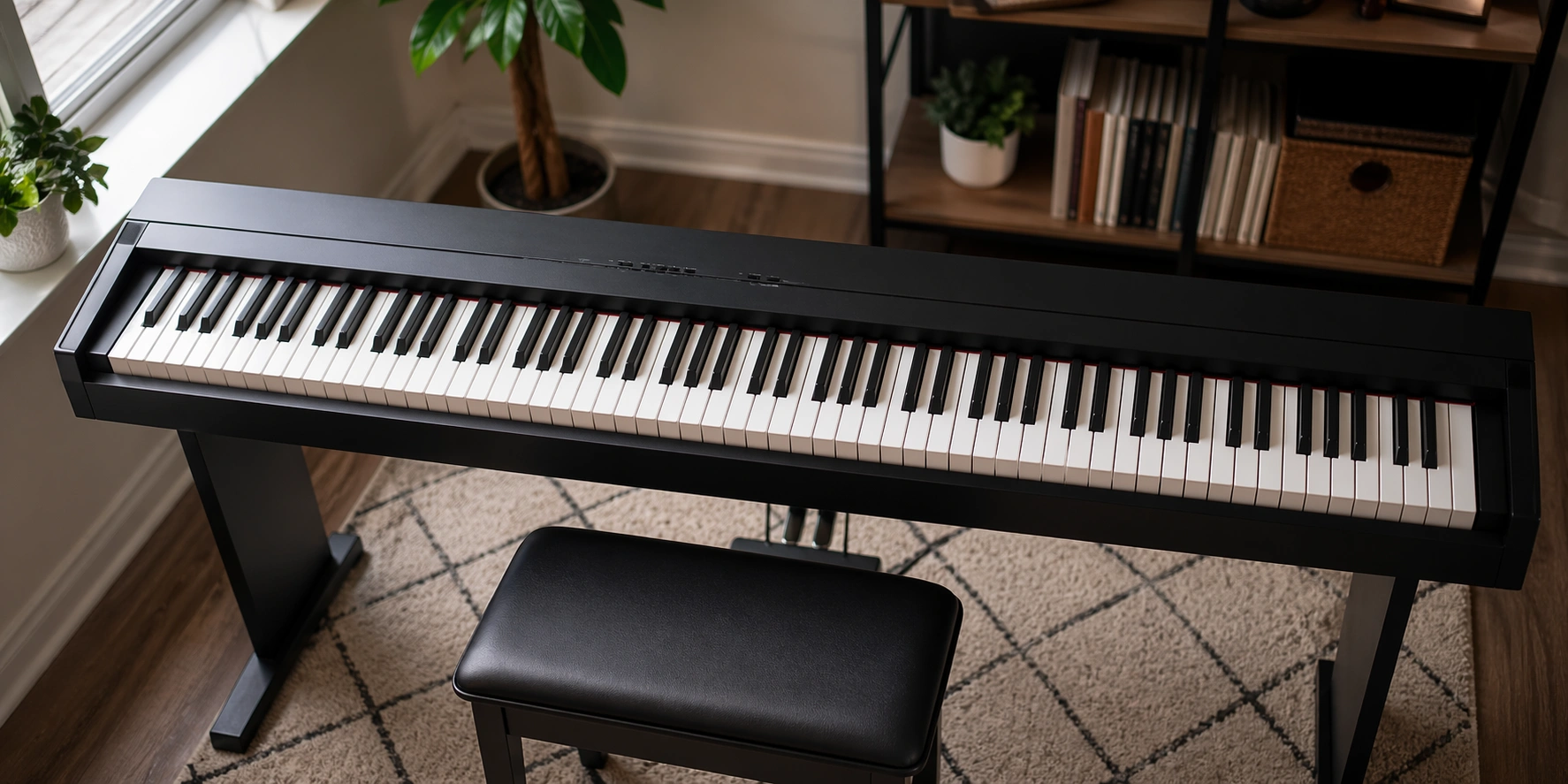
The standard answer is 88 keys. A full piano gives a wide note range. That range suits beginner songs, pop music, jazz, and advanced classical pieces.
How many white keys are on a piano?
A standard piano has 52 white keys. These hold the natural notes. The note names repeat in order. You see A, B, C, D, E, F, and G again and again across the keyboard.
How many black keys are on a piano?
A standard piano has 36 black keys. These sit in groups of two and three. That pattern helps you find notes fast. Many beginners find middle C by using that pattern first.
Why the key count matters
Key count shapes your playing room. Short keyboards save space. Full keyboards give the full note range. I tell new players one thing often. Buy for next year, not just next week.
Why Most Modern Pianos Have 88 Keys
Pianos did not start at 88 keys. Early pianos had fewer keys. Over time, composers wanted more bass notes and more top notes. Makers kept expanding the range. That long shift led to the modern 88-key standard.
Early pianos had fewer keys
Older pianos had shorter keyboards. That matched the music of that period. Newer music pushed the range wider. Piano makers responded with more keys over time.
Why the range grew
Composers wanted stronger bass and brighter treble. Players wanted more expression. A wider keyboard gave both. That is why the instrument changed so much across history.
Why 88 became the standard
The modern piano spans seven full octaves plus extra keys. That range fits most piano music well. It gives enough room for deep left-hand parts and bright right-hand lines.
How a Piano Keyboard Works
A piano keyboard uses a repeating pattern. You do not need all 88 notes memorized on day one. You only need to see the white-note cycle and the black-key groups.
White key pattern
White keys follow the musical alphabet. The order repeats across the keyboard. Once you learn one group, the next group feels familiar fast.
Black key pattern
Black keys appear in groups of two and three. That pattern helps you spot C, D, F, G, and A with less guesswork.
Octaves and note groups
An octave repeats the same note name at a higher pitch. Full-size pianos give many octaves. Small keyboards cut low notes, high notes, or both.
Step-by-Step Guide: How to Count Piano Keys Fast
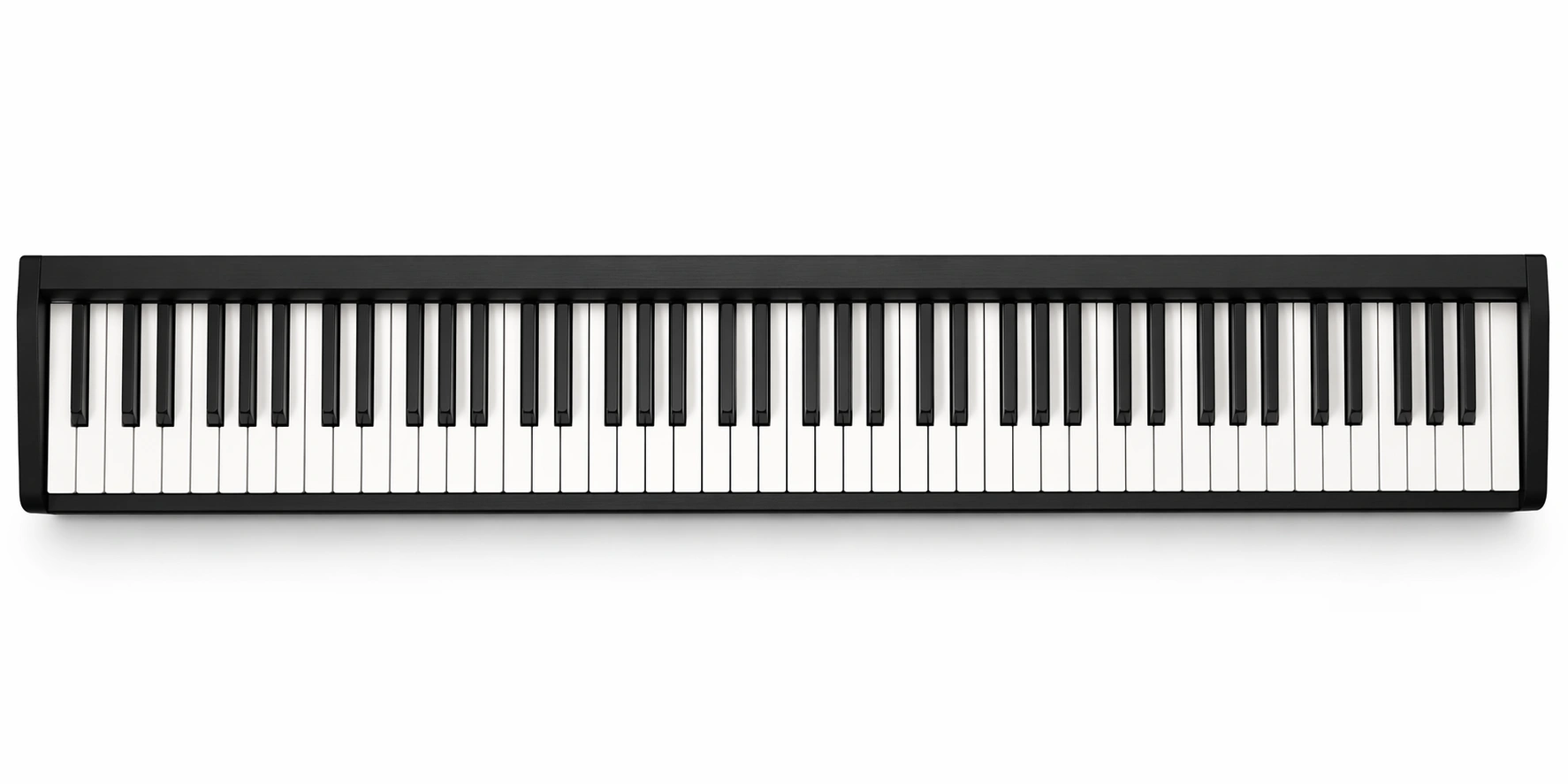
You can count any piano keyboard in under two minutes. This works on acoustic pianos, digital pianos, and portable keyboards.
- Start at the far left key.
- Count every white and black key.
- Stop at the far right key.
- Count white keys alone next.
- Count black keys last.
- Check the total against common sizes.
On a full piano, the total will be 88. On many beginner models, the total will be 61. On many stage models, the total will be 76.
61 vs 76 vs 88 Keys: Full Comparison
| Keyboard size | Best for | Main plus | Main limit |
|---|---|---|---|
| 61 keys | First lessons, kids, travel | Small and light | Less note range |
| 76 keys | Stage use, pop, church music | More room without full size | Still not full range |
| 88 keys | Full piano study | Complete range | Takes more space |
Best for beginners
A 61-key board can work for a first step. A full 88-key board gives more room to grow.
Best for travel
A 61-key board wins on size and weight. It fits small rooms and easy carrying better. That makes sense for short practice sessions and casual playing.
Best for classical music
Classical study fits 88 keys best. Full-range pieces need the full keyboard more often. A short board can block later progress.
Best for casual home use
Casual players can do well with 61 or 76 keys. Your music style should lead the choice. Your room size matters too.
Are All Pianos 88 Keys?
No. Most modern acoustic pianos use 88 keys. Many digital pianos match that full size. Portable keyboards often use 61 keys. Some stage boards use 76 keys.
| Instrument type | Usual key count | Who it fits |
|---|---|---|
| Portable keyboard | 61 keys | New players and travel use |
| Stage keyboard | 76 or 88 keys | Live players |
| Digital piano | 88 keys | Home practice and lessons |
| Acoustic piano | 88 keys | Traditional piano study |
Common Problems & Fixes
| Problem | Likely cause | Fix |
|---|---|---|
| Song needs notes you do not have | Keyboard is too short | Move to 76 or 88 keys |
| Hands feel cramped | Small range or compact design | Pick full-size keys |
| Practice feels less natural | Very light action | Try weighted keys |
| Lessons outgrow the instrument fast | 61 keys limits progress | Choose an 88-key model |
I see one mistake often. People buy the cheapest keyboard first. Three months later, they need a second keyboard. A smarter fit at the start can save money.
Common Mistakes to Avoid
- Buying a 61-key board for serious classical study.
- Ignoring weighted keys.
- Mixing up a portable keyboard with a digital piano.
- Checking price first and range second.
- Skipping a stand, bench, or pedal.
Pro Tips / Best Practices
- Pick 88 keys for long-term piano study.
- Pick 61 keys for travel and basic use.
- Pick 76 keys for mixed stage use.
- Pick weighted keys for a more piano-like feel.
- Pick full-size keys for easier hand placement.
Tool Recommendations
I picked one compact starter, one full-range starter, and one step-up model. Each one matches this topic closely.
Yamaha EZ-310 61-Key Portable Keyboard
Great for first lessons, small rooms, and easy carrying.
Yamaha P-225 88-Key Digital Piano
Good for full-range study in a compact home setup.
Kawai ES120 Digital Piano
Good for players who want weighted action and full range.
Helpful Sources
FAQ
How many keys are there on a full-size piano keyboard?
A full-size modern piano keyboard has 88 keys. That includes 52 white keys and 36 black keys.
Do all pianos have 88 keys?
No. Full-size modern pianos do. Many portable keyboards use 61 keys. Some stage boards use 76 keys.
Can you learn piano on a 61-key keyboard?
Yes. It works for first lessons and simple songs. Long-term piano study fits 88 keys better.
Is 76 keys enough for piano practice?
It can work for pop, church, and live use. Full classical study fits 88 keys better.
Why do pianos have 88 keys?
The keyboard grew over time as composers wanted more range. The first piano had fewer keys. The modern standard became 88 keys later.
How many white keys and black keys are on a piano?
A standard piano has 52 white keys and 36 black keys. Together, that makes 88 keys.
Is an 88-key keyboard worth it for beginners?
Yes, if you plan steady progress. It gives the full note range from day one. It often feels closer to an acoustic piano too.
Final Thoughts
The answer is easy. A standard piano keyboard has 88 keys. That is the best fit for full piano learning. A 61-key board can still start the job. An 88-key model gives more room to grow.