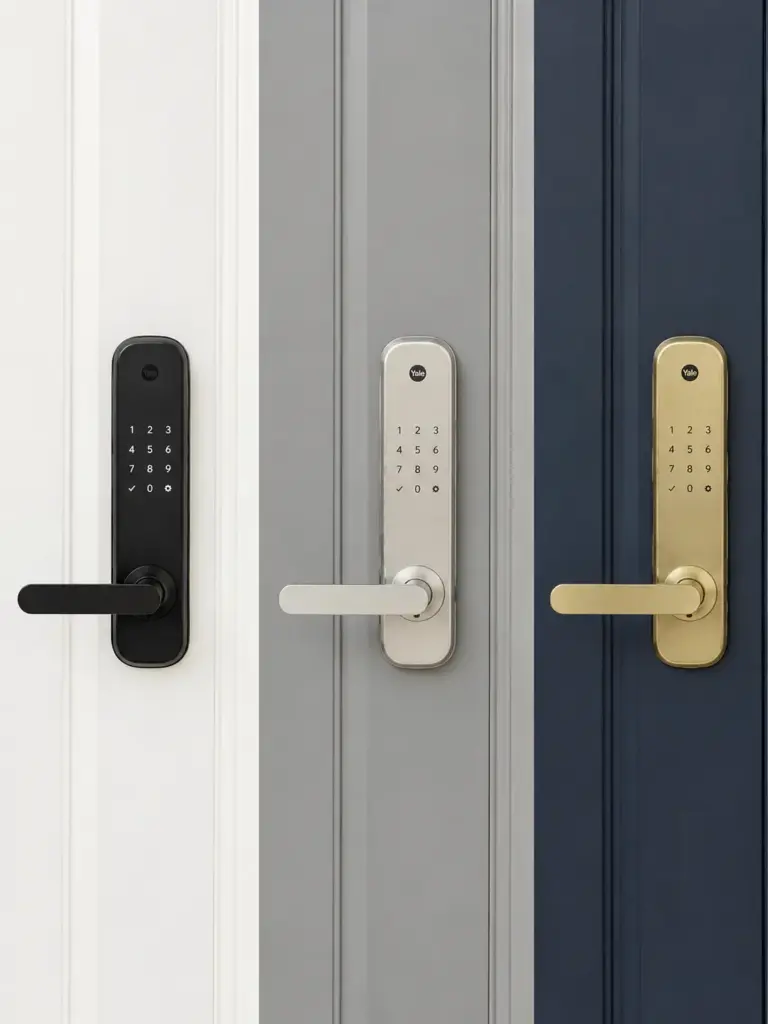
The best smart lock finish matches your door hardware, home style, and cleaning needs. Matte black suits many modern homes, satin nickel offers a versatile silver look, and brass or bronze adds warmth to traditional entryways. Always check the lock model for available finishes and verify that its security features meet your needs.
Across the United States, a front door does more than welcome family and guests. It helps protect the home and sets the tone for the rest of the house. A smart lock adds keyless entry, and its finish can help the lock blend with the door, handle, hinges, and nearby lights.
Smart lock finishes vary in color, texture, shine, and upkeep. Some look sleek and dark, while others offer a bright metallic surface or a muted, aged appearance. The right choice depends on your existing hardware, local exposure to sun and rain, cleaning habits, and the exact lock model you plan to buy.
This guide explains the main smart lock finishes, how they compare, and what to check before you order one. It also separates appearance from performance, because a beautiful finish does not prove that a lock is more secure or more durable.
Source: skyryedesign.com
What Are Smart Lock Finishes?
A smart lock finish is the visible color and surface treatment on the lock’s exterior parts. These parts may include the keypad, fingerprint reader housing, thumb turn, escutcheon, and handle. The finish can change how the lock looks, reflects light, and shows everyday marks.
A finish is not the same as the material underneath it. Two locks may look like brass but use different base metals and coatings. Likewise, two black locks may use different surface treatments that affect their texture, sheen, and resistance to wear.
Smart locks combine traditional door hardware with electronic parts. A finish can cover much of the visible housing, but it does not tell you whether the lock uses a strong deadbolt, reliable electronics, or a well-designed access system. Review those features separately.
Source: aplockandsafe.ie
Color
The visible shade, such as black, silver, gold, or brown, determines how the lock relates to nearby hardware.
Sheen
Matte, satin, brushed, and polished surfaces reflect different amounts of light and show marks in different ways.
Surface treatment
A coating, plated layer, or other finish process can affect appearance and wear, depending on the material and product design.
Base material
The underlying metal or other material influences the construction, while the visible finish provides a separate layer of appearance and, in some cases, protection.
Why Finish Names Can Be Confusing
Manufacturers do not always use identical names for similar colors. One brand may offer satin brass, while another calls a related shade brushed gold. These labels do not guarantee an exact match in color, texture, or manufacturing method.
For the closest match, compare the manufacturer’s finish code, product photographs, and physical samples when available. A lock described as bronze may look darker or redder than the bronze finish on your existing handle.
Check the exact model
A brand may offer different finishes across its product range, and not every color is available for every model.
Compare products in similar light
Warm indoor lighting and cool daylight can make the same metallic surface appear different.
The Most Popular Smart Lock Finishes Compared
The most useful way to compare smart lock finishes is to consider their appearance, the hardware they complement, and the care they may need. No single finish is right for every American home. A contemporary townhouse, a brick Colonial, and a farmhouse may all call for different visual choices.
The table below gives general style guidance. Actual color, scratch resistance, corrosion resistance, and cleaning instructions depend on the product’s materials and finish process. Treat the maintenance notes as starting points, not guarantees about every lock.
Source: manuals.plus
Matte black
A low-gloss dark finish that works well with modern doors, dark window frames, and simple exterior hardware. Dust, pale residue, and scratches may stand out against some black surfaces.
Satin nickel
A muted silver finish that pairs with many neutral door colors and stainless-style hardware. Its softer sheen often makes it a flexible option for mixed traditional and modern interiors.
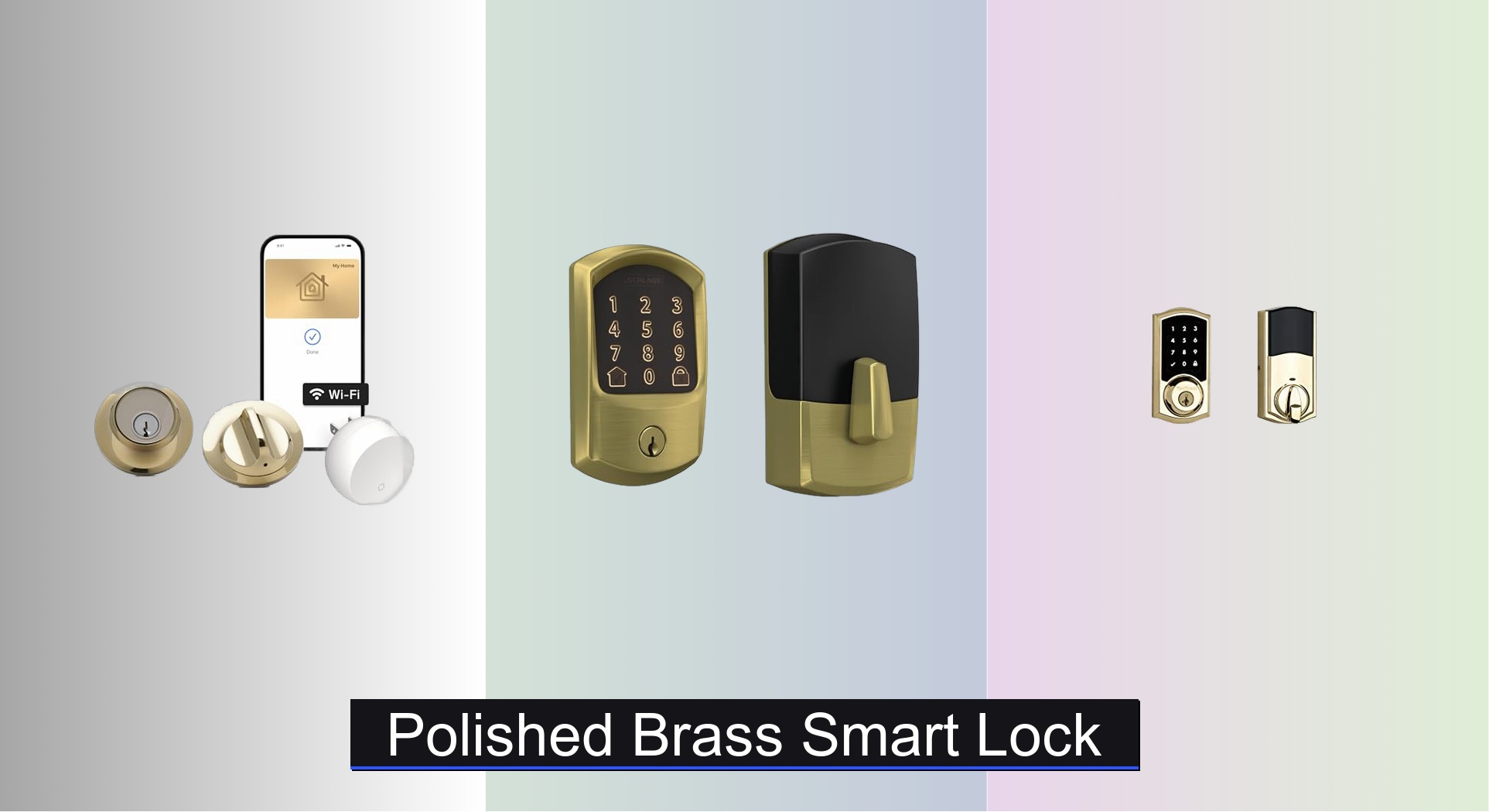
Polished brass
A bright gold-toned finish that suits classic entryways, warm wood doors, and traditional details. Its shine may make fingerprints and surface marks more noticeable.
Oil-rubbed bronze
A dark brown or nearly black finish, sometimes with warm highlights. It can complement wood, brick, and traditional architectural details, but the exact shade varies by manufacturer.
Polished chrome
A reflective silver finish that creates a crisp, bright look. Its mirror-like surface can show fingerprints and water spots, depending on the coating and conditions.
Satin brass
A softer gold finish with less shine than polished brass. It can add warmth without the strong reflection of a highly polished surface.
Bronze and brushed dark metal
These labels cover several looks, from warm brown to deep charcoal. Review the actual finish sample rather than assuming all bronze or dark-metal products will match.
Quick Comparison Table
Use this table to narrow your choices by appearance and general upkeep. Fingerprint visibility is relative, and real-world performance depends on the exact surface, use, and lighting.
Matte black
Style: modern and bold. Hardware match: black handles and dark fixtures. Care: remove dust with a soft cloth and check for pale residue.
Satin nickel
Style: understated and versatile. Hardware match: brushed silver and many neutral finishes. Care: routine wiping with a soft cloth is often enough.
Polished brass
Style: classic and bright. Hardware match: traditional gold-toned fixtures. Care: wipe promptly and use only the manufacturer’s approved cleaner.
Oil-rubbed bronze
Style: warm, dark, and traditional. Hardware match: dark bronze or rustic fittings. Care: avoid abrasive cleaning that may change the surface appearance.
Polished chrome
Style: bright and reflective. Hardware match: chrome and polished silver fixtures. Care: dry after cleaning to limit visible water spots.
Satin brass
Style: warm and restrained. Hardware match: muted gold fixtures. Care: use a gentle cleaner approved for the specific coating.
How to Choose the Right Smart Lock Finish for Your Home
Start with the hardware you plan to keep. Matching the smart lock to the front door handle and nearby fixtures usually creates a more consistent look than choosing a finish in isolation. If you are replacing all the exterior hardware, you have more freedom to choose a new style.
Next, consider the door color, the home’s architecture, and how much visual contrast you want. A dark lock may stand out against a white door, while satin nickel can blend with gray, white, or light blue finishes. Warm brass can add contrast to a dark green or navy door, depending on the exact shades.
Finally, think about daily use. A busy family entrance may need frequent wiping, while a sheltered side door may stay cleaner. If your lock is exposed to direct sun, rain, salt air, or harsh temperature changes, verify the manufacturer’s environmental specifications instead of relying on the finish name.
Source: smartlockadvice.com
Match the main door hardware
Compare the lock with the handle, deadbolt, hinges, door knocker, and nearby lighting. They do not all have to match, but deliberate combinations tend to look more cohesive.
Consider architectural style
Matte black and satin nickel often suit modern designs, while brass and bronze can complement classic or rustic homes. These are flexible design conventions, not strict rules.
Account for the setting
A covered porch and an exposed coastal entry create different demands. Check whether the specific lock is rated for the installation environment.
Inspect the keypad and handle together
Some smart locks have multiple visible components, and their finishes may not look identical. Review images of the complete installed product.
A Simple Three-Step Selection Method
First, identify your main hardware finish and decide whether you want a close match or a clear contrast. Second, compare the available lock finishes in real photographs or physical samples. Third, check the lock’s fit, installation requirements, and operating features before making the final choice.
For example, a homeowner with satin nickel handles and silver outdoor lights might shortlist satin nickel smart locks first. If the available models do not meet the household’s access needs, a different finish may be the better compromise. Security and compatibility should take priority over an exact color match.
Shortlist two finishes
Narrow the options before comparing models. This makes it easier to judge appearance without losing sight of function.
Check actual availability
Confirm that the desired finish is sold for the exact model, door configuration, and market where you intend to install it.
Choose function first
Confirm the lock fits your door and supports your preferred entry methods before paying extra for a particular finish.
Does a Smart Lock Finish Affect Durability?
A finish can influence how a smart lock handles routine contact, cleaning, and exposure to the elements, but the color alone cannot predict its service life. The base material, coating method, product construction, and installation environment all matter.
A black lock is not automatically more durable than a brass-colored lock. Likewise, a polished finish is not necessarily weaker than a brushed one. To compare durability, look for manufacturer specifications about corrosion resistance, weather exposure, finish care, and warranty coverage.
Outdoor smart locks face conditions that indoor hardware may not. Sunlight can affect some coatings, moisture can leave deposits or encourage corrosion on susceptible materials, and coastal salt exposure can be especially demanding. A covered porch may reduce direct exposure, but it does not replace the need to follow the product’s installation requirements.
Source: fity.club
Check outdoor suitability
Review the manufacturer’s stated operating and environmental limits for the exact model. Do not assume every smart lock is suitable for a fully exposed exterior door.
Read the finish warranty
Find out whether the warranty covers peeling, discoloration, corrosion, or other finish issues, and note any exclusions.
Follow cleaning instructions
Strong solvents, scouring pads, and abrasive cleaners may damage coatings. Use only methods approved for the lock’s surface.
Separate finish wear from lock failure
A surface scratch is not the same as a failed deadbolt or electronic fault. Inspect mechanical and electronic problems separately.
What to Check Before Installing an Exterior Smart Lock
Before installation, confirm that the lock is designed for the location, that its exterior assembly can tolerate the expected exposure, and that the door itself meets the installation requirements. Follow the supplied instructions for alignment, fasteners, weather protection, and battery access.
After installation, test the lock with the door open before closing it. Confirm that the bolt moves freely, the keypad or other access method works, and the door can be locked and unlocked without force. Keep a supported backup entry method available while you learn the new system.
Do not force a stiff bolt
Misalignment, a tight door, or an installation error can strain the mechanism. Correct the cause instead of repeatedly operating a motor against resistance.
Keep emergency access in mind
Understand the model’s battery warning, backup power method if provided, and mechanical key or other recovery option where applicable.
How to Clean and Maintain Smart Lock Finishes
Gentle cleaning is the safest starting point for most smart lock surfaces, but the product manual takes priority. Smart locks contain electronics, sensors, and moving parts, so cleaning methods intended for ordinary metal hardware may not be suitable.
Before cleaning, check the manufacturer’s instructions and determine whether the model has restrictions on moisture or cleaning products. Do not spray liquid directly into the keypad, fingerprint reader, seams, or other openings. Apply an approved cleaner to a soft cloth when the instructions permit it.
Routine care should remove dust, skin oils, and surface residue without wearing away the finish. A gentle wipe is often sufficient. Avoid steel wool, rough sponges, abrasive powders, and unapproved chemical cleaners because they can scratch or alter the surface.
Source: www.pinterest.com
Use a soft cloth
Choose a clean, nonabrasive microfiber or other cloth approved by the manufacturer.
Limit moisture
Keep liquids away from electronic openings and never immerse the lock or its components.
Avoid unapproved polish
Metal polish may be unsuitable for lacquered, painted, plated, or coated surfaces.
Inspect the finish
Check for peeling, unusual discoloration, loose trim, or damage that may need manufacturer support.
Common Cleaning Mistakes to Avoid
A cleaner that works on a solid metal handle may harm a coated smart lock. Do not assume that a brass-colored surface is solid brass or that a black surface can tolerate harsh cleaning. The actual construction and manufacturer guidance determine the right method.
If the finish changes after cleaning, stop using the product that caused the change. Gently remove any remaining residue only if the manual permits it, and contact the manufacturer if the coating appears damaged.
Do not scrub hard
Heavy pressure can leave visible marks or remove surface treatments.
Do not soak the keypad
Excess liquid can enter openings and affect electronic components.
Do not assume discoloration is dirt
A change in color may indicate coating wear, a chemical reaction, or environmental damage rather than ordinary residue.
Smart Lock Finishes and Door Hardware Matching
Matching every metal surface is one way to create a consistent entryway, but mixing finishes can also look intentional. The key is to repeat a finish or tone so that the combination feels planned rather than accidental.
For many homes, the front door handle is the best starting point because it occupies a prominent position beside the lock. Hinges, house numbers, mail slots, and exterior lights can provide secondary cues. If these items already use several finishes, select the lock based on the strongest visual element rather than trying to match everything.
Color also changes with light and surroundings. A bronze lock may appear almost black in shade and warmer brown in sunlight. When the exact match matters, view the sample at the door and at different times of day.
Source: grandalarms.com
Modern homes
Matte black can complement simple lines, dark window frames, and minimalist exterior lights.
Traditional homes
Polished brass, satin brass, and bronze can work well with paneled doors, classic trim, and warm wood.
Transitional homes
Satin nickel often provides a bridge between contemporary shapes and traditional door details.
Mixed-metal interiors
Choose one dominant finish and repeat the secondary finish in a few other fixtures to create visual balance.
Should the Smart Lock Match the Hinges?
Matching the lock and hinges is optional. Hinges may be less visually prominent than the handle, and a small difference in finish can be hard to notice from normal viewing distance. However, a strong mismatch among the handle, lock, and nearby fixtures may be more noticeable.
If the hinges are visible and you want a coordinated look, compare the complete set before buying. If you plan to replace the hinges later, choose the lock for the current door style and your preferred long-term design.
For a uniform look
Use closely matched finishes on the most visible pieces of hardware.
For a mixed-metal look
Keep the contrast deliberate and repeat the chosen tones elsewhere near the entry.
What to Check Before Buying a Smart Lock in the United States
When shopping for a smart lock in the United States, confirm the lock’s fit and operating features before treating the finish as the deciding factor. Residential doors differ in thickness, bore size, backset, deadbolt arrangement, and handle placement. A lock that looks right may still be unsuitable for a particular door.
Read the installation guide for the exact model and check the door measurements it requires. For a rental property, shared home, or building with specific access rules, confirm that replacing the lock is permitted and that any required physical key or emergency access arrangement remains available.
Smart lock features also vary. Some models use a keypad, fingerprint reader, app, physical key, or a combination of these methods. Remote control may depend on a hub, a compatible network device, a subscription, or a supported wireless connection. Verify the details instead of assuming that every smart lock offers the same functions.
Source: smartlockmfg.com
Door compatibility
Check door thickness, bore dimensions, backset, bolt type, handing where relevant, and any stated installation limits.
Access methods
Choose the entry options that suit the household, such as a keypad, app, fingerprint reader, physical key, or supported combination.
Connectivity
Verify the required wireless protocol, hub, app, operating system, and internet access for the features you intend to use.
Power and recovery
Understand battery life estimates, low-battery warnings, replacement requirements, and documented backup entry methods.
Review the manufacturer’s technical details, independent certification where applicable, and any relevant ratings for the complete lock.
Warranty and replacement parts
Check the warranty terms, support options, availability of replacement components, and whether finish damage is excluded.
Does a More Expensive Finish Mean a Better Lock?
No. A higher price may reflect a different surface treatment, product design, material, or feature set, but price alone does not establish stronger security or longer service life. Compare the actual specifications and warranty terms.
If two models offer the same finish, look at their deadbolt construction, access controls, installation quality, connectivity requirements, software support, and recovery options. Choose the model that meets your security and daily-use needs, then select the finish that fits your home.
Compare the whole product
Evaluate the lock’s documented features rather than using color or price as a substitute for security evidence.
Check ongoing costs
Account for batteries, optional hubs, subscriptions, and replacement parts when comparing total ownership costs.
Common Smart Lock Finish Problems and How to Address Them
Finish problems usually appear as fingerprints, water spots, scratches, fading, or peeling. Start by identifying the symptom and checking the product’s cleaning guidance. Do not assume that every mark indicates a defect or that every surface change can be repaired at home.
If a new lock arrives with a damaged coating, photograph the condition and contact the seller or manufacturer before attempting a repair. For a lock that has been installed for some time, check the warranty and care instructions before applying any polish, paint, or protective coating.
Source: stockcake.com
Fingerprints and skin oils
Wipe the surface gently with an approved cloth. Highly polished and dark surfaces may make some marks easier to see.
Water spots
Use the manufacturer’s recommended cleaning method and dry the surface when permitted. Do not use acidic cleaners unless specifically approved.
Scratches
Avoid abrasive home remedies. Ask the manufacturer whether repair, replacement trim, or warranty support is available.
Peeling or flaking
Stop using harsh cleaners and document the damage. Contact the manufacturer to determine whether the coating issue qualifies for support.
Unexpected color changes
Consider sunlight, moisture, cleaning chemicals, and normal surface wear. Verify the cause before trying to refinish the lock.
Can You Repaint or Refinish a Smart Lock?
Repainting a smart lock is usually not a simple cosmetic task. Paint can block a keypad, cover sensors, interfere with moving parts, obstruct seams, or prevent a component from fitting correctly. Opening the housing may also affect the warranty or damage electronic parts.
Do not coat the lock while it is installed and powered. If a finish change is necessary, ask the manufacturer about approved replacement exterior parts or a supported refinishing option. Replacing the lock or visible trim with a compatible product may be safer than applying an unapproved coating.
Protect electronic parts
Never allow paint, solvents, or excess moisture to enter the keypad, fingerprint reader, motor housing, or battery compartment.
Check warranty conditions
Review the manufacturer’s rules before altering the surface or disassembling the product.
Frequently Asked Questions
Q
What is the most popular smart lock finish?
Matte black and satin nickel are common choices for contemporary and transitional home designs, while brass and bronze remain useful options for traditional styles. I cannot establish a single nationwide best-selling finish without current, comparable sales data across manufacturers and retailers. The best choice depends on your door hardware and preferred appearance.
Q
Which smart lock finish shows the fewest fingerprints?
A satin or brushed surface may make fingerprints less noticeable than a highly polished surface, but results vary by color, coating, lighting, and the person’s skin oils. Matte black can hide some marks while making dust or light residue more visible. Compare the exact surface if fingerprint visibility is a major concern.
Q
Is matte black better than satin nickel for a smart lock?
Neither finish is universally better. Matte black suits dark accents and creates a strong contrast on many light doors. Satin nickel offers a softer silver look that can coordinate with a broad range of fixtures. Compare the lock’s material, care instructions, and environmental suitability before choosing based on color.
Q
Do all smart lock brands offer the same finishes?
No. Available finishes depend on the brand, model, hardware configuration, and market. A finish offered for one model may be unavailable for another in the same product family. Check the exact product listing and installation documentation before ordering.
Q
Can I use an indoor smart lock on an exterior door?
Only if the manufacturer specifies that the model is suitable for that installation. Outdoor doors can expose locks to moisture, sunlight, and temperature changes. Review the environmental limits and installation instructions for the exact product, especially if the door is uncovered or exposed to coastal conditions.
Q
Are brass-colored smart locks made of real brass?
Not necessarily. A brass-colored finish may be applied to a different base material, and a product described as brass may use a particular metal only in certain components. Check the manufacturer’s material specifications instead of relying on the color or product name.
Q
Can I match a new smart lock to my existing door handle?
Yes, but the closest match depends on the finish name, shade, texture, and sheen. Compare the manufacturer’s photographs and finish codes, and view a physical sample when possible. If an exact match is unavailable, choose a deliberate contrast or a finish that coordinates with the other prominent hardware.
Q
Does the finish affect smart lock security?
The visible finish alone does not establish a lock’s security. Security depends on the complete product, including its mechanical design, electronic controls, access management, installation, and other documented features. Compare independent certifications where applicable and follow the installation instructions for the exact model.
✦ Wrapping Up
Conclusion
Smart lock finishes help shape the look of a front door, but the right choice involves more than color. Matte black offers a bold modern style, satin nickel provides a flexible silver tone, and brass or bronze can bring warmth to a traditional entry. Surface texture and sheen also affect how everyday marks appear.
Before buying, compare the lock with your existing hardware, review the manufacturer’s care instructions, and confirm that the model suits your door and outdoor conditions. Finish labels alone cannot establish durability, material quality, or security. A well-chosen finish should complement the home while the lock itself meets your practical needs.
💡 Key Takeaway
List your current door hardware finishes, shortlist two smart lock colors, compare real product samples when possible, and verify door compatibility, outdoor suitability, warranty coverage, and backup entry options before placing an order.
I’m Ethan Carter, a home security systems specialist at Diggons.com. I focus on modern surveillance solutions and smart protection technologies that help people keep their homes safe and secure.
I have hands-on experience working with security cameras, video doorbells, alarm systems, and motion detection devices. I test real products and explore practical setups so I can provide clear, easy-to-follow guidance for everyday users.
My goal is to simplify home security by helping you understand how these systems work, how to fix common issues, and how to choose the right products with confidence. At Diggons.com, I share honest insights, comparisons, and real-world advice to make home security easier and more effective.