
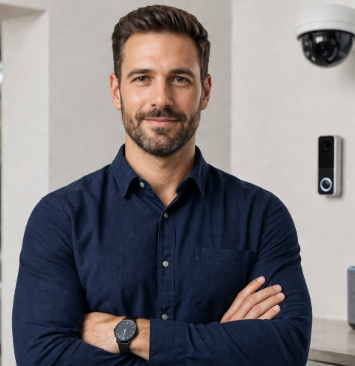
A battery video doorbell can provide live view, motion alerts, and recording without a required monthly fee. Models such as the Eufy Video Doorbell, Reolink Video Doorbell, and Blink Video Doorbell can avoid subscriptions when paired with local storage, though features and storage costs vary.
Battery life, video quality, motion detection, and storage options can differ widely. This guide compares practical choices, explains ongoing costs, and covers setup tips that help maintain a reliable and secure connection.
Key Takeaways
- Local storage can remove recurring cloud fees.
- Battery life depends on traffic, settings, and weather.
- Strong Wi-Fi improves alerts and video access.
How Subscription-Free Battery Doorbells Work
Battery doorbells record video and send alerts without requiring a monthly plan. They store footage on a memory card, a home hub, or the device itself, while the battery powers the camera, sensors, and wireless connection.
Local Storage Versus Cloud Storage
Subscription-free models usually save recordings locally instead of uploading them to a paid cloud account. Depending on the model, storage may use a microSD card, an indoor hub, or built-in memory. Some cameras also support a network video recorder (NVR), but buyers should check compatibility before purchasing.
Local storage avoids monthly fees and keeps recordings in the home. However, a thief could take the doorbell or storage device, and a full card may overwrite older clips. Users should enable encryption, choose a suitable storage capacity, and back up important footage.
| Storage method | Main benefit | Important limitation |
|---|---|---|
| microSD card | Low-cost, direct storage | May be lost or damaged |
| Home hub | Adds storage and may protect the card indoors | Costs more and needs power |
| Cloud plan | Off-site backup and remote access | Usually requires a monthly fee |
Some brands provide free cloud storage for a limited period or selected features. Buyers should confirm how long clips remain available and whether video downloads cost extra.
Essential Features Available Without Monthly Fees
A battery doorbell can provide several useful features without a subscription. These commonly include live viewing, two-way audio, motion alerts, doorbell-press notifications, night vision, and saved clips on local storage. Person detection may also work without fees, although advanced recognition features can vary by brand and model.
Battery life depends on motion activity, temperature, video quality, and alert settings. Frequent visitors, cold weather, and continuous live viewing drain the battery faster. A removable battery or a spare pack lets users keep the doorbell running while charging the other battery.
Buyers should also check Wi-Fi range, video resolution, viewing angle, weather resistance, and installation needs. Some models require an existing doorbell transformer, while battery models generally use wireless installation. A subscription may still unlock longer cloud history, professional monitoring, or advanced artificial intelligence tools, even when basic operation remains free.
Top Battery Video Doorbells With No Required Subscription
Battery models can avoid monthly fees by saving recordings to internal memory, a microSD card, or a compatible home hub. Buyers should check storage limits, battery life, Wi-Fi requirements, and whether advanced detection features require an optional plan.
Eufy Security Video Doorbells
Eufy offers several battery doorbells that support local recording without a required subscription. The Video Doorbell E340 records at up to 2K resolution and uses two cameras on some versions: one views visitors, while the other monitors packages near the ground.
Recordings can go to the doorbell’s built-in storage or a compatible Eufy HomeBase, depending on the model. Local storage avoids monthly cloud fees, but the buyer should confirm the exact storage method before purchasing.
The E340 includes color night vision, motion alerts, and two-way audio. Its removable battery can make charging easier than removing the whole unit, although battery life depends on motion levels, weather, Wi-Fi strength, and recording settings.
Reolink Battery Doorbells
The Reolink 2K Battery Video Doorbell provides local recording without a required subscription. It supports 2K video, motion alerts, night vision, two-way audio, and package or person detection on supported versions.
Many Reolink models use a microSD card for storage. This setup gives the owner direct control of recordings and avoids cloud charges, but the card must be purchased separately if one is not included. A card with sufficient capacity helps retain more event history.
The battery is rechargeable, so installation does not require existing doorbell wiring. Reolink also offers wired versions, and buyers should check the product name carefully because battery and wired models can look similar. The doorbell generally requires a 2.4 GHz Wi-Fi connection.
TP-Link Tapo Battery Doorbells
TP-Link Tapo battery doorbells focus on local storage and smart alerts without requiring a paid plan. Depending on the model, recordings can save to a microSD card, a Tapo hub, or optional cloud storage.
Typical features include 2K video, infrared or color night vision, motion detection, activity zones, and two-way audio. Some models can identify people, vehicles, or packages, but detection features may vary by model and may require specific settings or hardware.
A rechargeable battery makes the doorbell suitable for homes without existing wiring. Frequent motion, cold temperatures, weak Wi-Fi, and live viewing can shorten the time between charges. Buyers should verify whether the package includes a chime and whether the model supports 2.4 GHz Wi-Fi only or dual-band Wi-Fi.
Aqara Battery Doorbells
Aqara’s battery doorbell options support local control and can work without a required subscription when paired with compatible storage or smart-home equipment. The Aqara G410, for example, adds a built-in Matter hub, which can help connect supported smart-home devices.
Aqara models may offer features such as high-resolution video, two-way audio, motion alerts, package monitoring, and integration with Apple Home, Google Home, or Alexa. Compatibility depends on the exact model, region, and required hub or platform.
The buyer should check how recordings save before purchasing. Some features may depend on an Aqara hub, a microSD card, or a supported smart-home service. Battery runtime also changes with traffic, alert sensitivity, temperature, and the number of live views.
Storage Options and Ongoing Costs
Battery video doorbells can avoid monthly fees by saving recordings to a microSD card, built-in memory, or a separate hub. Buyers should check storage limits, recording access, and whether the doorbell needs an optional cloud plan for advanced features.
Built-In Memory and microSD Cards
Some models include built-in memory or accept a microSD card for local recording. The Aqara G4, for example, supports a microSD card up to 512GB and can store video without a required subscription. Other models include a preinstalled card, such as a 32GB card, which lets the owner use local storage after installation.
Local storage removes monthly recording fees, but it has limits. A card can fill quickly when the doorbell records many motion events. The owner must also replace or format the card when it reaches capacity. A larger, high-endurance microSD card may last longer under frequent recording, but compatibility should be checked first.
Local storage also depends on the doorbell remaining connected to power and Wi-Fi when the owner views recordings. Battery models may limit continuous recording to preserve battery life, so they usually save motion-triggered clips instead.
Home Base and Hub Storage
Some battery doorbells send recordings to a separate indoor hub or home base. The hub may include internal storage or accept a microSD card, keeping video inside the home instead of relying on the manufacturer’s cloud service.
A hub can provide more storage than the doorbell itself and may protect recordings if someone removes the outdoor unit. It can also manage several cameras through one app. However, the hub adds cost, uses an indoor power outlet, and may require a stronger connection between the doorbell and the hub.
Buyers should confirm whether the hub comes with the doorbell. They should also check storage capacity, overwrite settings, and whether the system requires the hub for recording. These details affect the system’s total cost and daily use.
Optional Cloud Plan Considerations
A doorbell can work without a cloud plan when it provides local storage and allows owners to view or download recordings without payment. A cloud plan may still add features such as longer video history, backup storage, person detection, or easier access after theft or device damage.
| Cost type | What the owner receives |
|---|---|
| No monthly plan | Local recording and basic app access, if supported |
| Optional cloud plan | Online backup, longer history, or advanced alerts |
| One-time storage cost | A microSD card or compatible hub |
Owners should compare the plan’s monthly or yearly price with the cost of local storage. They should also review what happens when the plan ends, since some brands limit older recordings or advanced alerts after cancellation.
Battery Performance and Power Choices
Battery type affects installation, recharge time, weather resistance, and long-term cost. A doorbell with local storage can avoid subscription fees, but its battery still needs regular charging unless it supports replaceable cells or solar assistance.
Removable Batteries
Models with removable battery packs let users keep the doorbell installed while charging a spare battery. This setup reduces downtime and works well for homes with frequent motion alerts, live viewing, or cold weather, which can shorten battery life.
The battery usually slides out from the doorbell or a separate compartment. Users should check whether the package includes a second battery, since many models sell it separately. They should also confirm the battery’s rated temperature range and charging method.
| Feature | What to check |
|---|---|
| Spare battery | Included or sold separately |
| Charging | USB cable, dock, or proprietary charger |
| Downtime | Lower when a charged spare is available |
| Cold-weather use | Battery life may decrease in freezing conditions |
A removable pack also makes replacement easier after several years. The doorbell itself may continue working even when the original battery no longer holds a full charge.
Rechargeable Built-In Batteries
Built-in rechargeable batteries create a cleaner appearance and reduce the risk of losing a removable pack. However, users must take the entire doorbell off its mount or bring it indoors when the battery needs charging.
Battery life depends on settings and activity. Frequent motion alerts, poor Wi-Fi signal, night recording, cold temperatures, and repeated live views can increase power use. Users can extend runtime by reducing motion zones, lowering alert sensitivity, or choosing a lower recording quality when available.
Before buying, users should check whether the model supports local recording without a paid plan. Some doorbells provide live view and two-way talk without a subscription, while cloud video history or advanced detection may require a monthly plan.
Solar Panel Compatibility
A compatible solar panel can reduce charging frequency, but it rarely eliminates the need to monitor the battery. The panel must receive enough direct sunlight, and nearby walls, roof overhangs, trees, and winter shadows can limit its output.
Users should choose a panel made for the specific doorbell or confirm its voltage, connector, and weather rating. Placement matters: a panel facing strong midday sun usually performs better than one mounted under a covered porch.
Solar charging works best when the doorbell has moderate activity and a clear exposure area. Homes with shaded entrances may gain little benefit, so users should treat solar support as a charging aid rather than a guaranteed replacement for manual charging.
Video Quality, Detection, and Alerts
A battery video doorbell should provide enough detail to identify visitors, cover the area near the door, and send useful alerts without constant false alarms. Clear audio, reliable night vision, and local recording also matter when the camera works without a subscription.
Resolution and Field of View
Most capable battery doorbells use 2K resolution, which provides more detail than standard 1080p. It can help users recognize faces, clothing, or packages, but image quality also depends on lighting, Wi-Fi strength, and lens design.
A wide or head-to-toe view can show both a visitor’s face and a package near the doorstep. The eufy E340, for example, uses dual cameras to cover the visitor and the lower doorway area. Buyers should check the camera’s viewing angle and aspect ratio rather than relying only on the stated resolution.
Battery models may reduce recording quality or frame rate to conserve power. Users should also check whether the doorbell stores full-resolution clips locally or limits certain features without a paid plan.
Person, Package, and Motion Detection
Basic motion detection usually works without a subscription, but advanced detection varies by model. Person detection can reduce alerts caused by pets, trees, or passing cars. Some models also identify packages, though package detection may require a compatible app, local storage device, or specific camera placement.
The Lorex models described in the search results provide person detection without a subscription. Other devices may offer only general motion alerts unless users pay for cloud features. Buyers should confirm which detection tools remain available after the trial period ends.
Detection zones and sensitivity controls help limit unwanted alerts. A doorbell facing a busy sidewalk may need a smaller activity area, while a recessed entry may require higher sensitivity to detect visitors.
Two-Way Audio and Night Vision
Two-way audio lets residents speak with visitors through the doorbell app. Clear microphones and speakers matter more than maximum volume, especially near traffic or strong wind. Some battery doorbells use short audio delays because the conversation travels through the home network.
Night vision performance depends on infrared lighting, color night vision, and nearby light sources. Infrared mode usually provides a black-and-white image, while color night vision needs enough ambient light. A bright porch light can improve faces but may also create glare on pale walls or reflective surfaces.
Buyers should check whether audio and night vision work without cloud storage. The listed eufy E340 includes two-way talk and color night vision, while local storage can preserve recorded clips without a monthly fee.
Installation and Smart Home Compatibility
A battery video doorbell avoids new wiring, but it still needs a suitable mounting surface, reliable Wi-Fi, and a compatible smart home platform. Buyers should check installation limits, network strength, and voice assistant support before choosing a model.
Wireless Installation Requirements
Most battery doorbells mount to wood, siding, brick, or concrete with a bracket and screws. Masonry may require wall plugs and a drill. The installer should position the camera about four feet above the ground and angle it toward faces, packages, and the walkway.
The doorbell needs a nearby Wi-Fi signal and enough space to remove its battery. A removable battery makes charging easier than removing the entire unit. Some models include a wedge mount, which can improve the view when the door sits beside a wall.
Battery life often lasts several months, but cold weather, frequent motion alerts, and live viewing can shorten it. A wired connection may keep the battery charged, but buyers should confirm whether the model supports this feature.
Wi-Fi Network Considerations
Most battery doorbells use 2.4 GHz Wi-Fi because it reaches farther through walls than 5 GHz. Some newer models support both bands, but the doorbell still needs a strong signal at the entrance. A phone app can help test signal strength before installation.
The router should use a current security setting, such as WPA2 or WPA3, and a stable internet connection. Thick exterior walls, metal doors, and long distances can weaken the signal. A mesh Wi-Fi node placed near the entrance may improve reliability.
A subscription-free doorbell can save recordings to built-in memory, a microSD card, or a compatible home hub. Local storage keeps basic recording available without cloud fees, but the owner must manage storage capacity and protect the device from theft.
Alexa, Google Home, and Apple Home Support
Alexa and Google Home usually offer the broadest support. Compatible doorbells can show a live feed on smart displays and announce motion or button presses through connected speakers. The exact features depend on the doorbell, app, and account settings.
Apple Home support varies more widely. A doorbell may need native HomeKit support or a bridge such as Home Assistant. Buyers should check the manufacturer’s current compatibility list rather than rely on the platform name alone.
Smart home integration can require cloud access even when video storage remains local. Buyers should also review permissions for cameras, microphones, and notifications. The Internet of Things describes how these connected devices exchange data across a home network.
Choosing the Right Model for Your Property
Property size, installation limits, and storage needs should guide the choice. Battery life, local recording, Wi-Fi range, and the cost of required accessories matter more than headline video resolution alone.
Best Option for Renters
Renters usually need a battery-powered doorbell that installs without drilling or replacing existing wiring. A model such as the Blink Video Doorbell can suit this need. It uses replaceable batteries and supports live view, motion alerts, and two-way talk without requiring a monthly plan. Its Sync Module can provide local recording, but buyers should confirm whether the selected package includes the module.
A renter should also check the lease and choose a removable mounting bracket when possible. Battery life depends on motion activity, weather, and the quality of the Wi-Fi signal. Apartments with shared entrances may limit motion settings, and a narrow field of view can help reduce alerts from nearby foot traffic.
Best Option for Large Properties
Large properties need strong Wi-Fi coverage, a wide viewing angle, and storage that can hold many motion events. The Reolink Video Doorbell WiFi works well for homes with existing doorbell wiring because it records to a microSD card or a compatible network video recorder. It does not require a cloud subscription for basic recording and alerts.
A wired model avoids frequent battery changes, but the router must reach the entrance reliably. If the property has a detached gate or a long driveway, a doorbell camera alone may not cover the full approach. The owner may need a second camera, a mesh Wi-Fi system, or a wired network connection. Local recording also gives the owner more control over access to footage.
Best Value for Long-Term Ownership
Long-term value depends on the full cost of ownership, not just the purchase price. A model with local microSD storage, such as compatible TP-Link Tapo or Reolink doorbells, can avoid recurring cloud fees. Buyers should check whether advanced detection, cloud backups, or longer video history require payment.
A wired camera usually offers better long-term convenience because it does not need battery replacement. A battery model may cost less to install, especially when existing wiring is unavailable. Before buying, the owner should confirm storage capacity, replacement costs, software support, weather protection, and compatibility with the home’s smart platform. Cameras that support common standards, such as ONVIF, may offer more flexibility with local recording equipment.
FAQs
Which battery video doorbells do not require a subscription?
Models with local storage can record without a monthly plan. Depending on the brand, footage may save to a microSD card, built-in memory, or a separate home hub. Buyers should confirm that local recording works without an active subscription.
Does a battery doorbell still record without Wi-Fi?
Most smart doorbells need Wi-Fi to send alerts and provide live viewing. Some can continue saving footage locally during an internet outage, but features vary by model.
How often does the battery need charging?
Battery life often ranges from about three to six months. Cold weather, frequent motion alerts, live viewing, and weak Wi-Fi can shorten that period.
What features may require payment?
A free setup may include live video, two-way audio, alerts, and local recording. Cloud video history, advanced person detection, longer storage, and expanded sharing tools may require a paid plan.
What should buyers check before purchasing?
- Local storage method and capacity
- Battery life and charging method
- Video quality and night vision
- Motion zones and person detection
- Doorbell compatibility and installation needs
- Whether the app requires a subscription for recording
Can a subscription-free doorbell work with a smart home system?
Some models support platforms such as Alexa or Google Home, while others offer limited integration. The product specifications should identify which features remain available without a subscription.
Conclusion
A battery video doorbell can avoid a monthly subscription when it supports local storage and provides essential alerts without a paid plan. Models may store recordings on a microSD card, built-in memory, or a compatible home hub.
Buyers should check the storage method, battery life, video quality, motion detection, and app features before choosing a model. Human detection and activity zones can reduce unwanted alerts, while two-way audio supports quick communication with visitors.
| Feature | What to check |
|---|---|
| Storage | microSD card, built-in memory, or hub |
| Power | Battery life and recharge needs |
| Video | Resolution and viewing angle |
| Alerts | Motion and person detection |
| Access | No-fee recording and playback |
Battery models offer easier installation, but they need periodic charging. Wired models avoid battery maintenance, while some battery doorbells can run without a subscription but may limit cloud storage, video history, or advanced alerts to paid plans.
The best choice depends on whether the buyer values simple installation, local privacy, long battery life, or smart-home support. They should also confirm that the doorbell retains key features when no subscription is active.