

Most US homes built after the 1950s use pocket doors in bathrooms, bedrooms, and closets to save floor space. A Kwikset sliding door lock replaces old or missing hardware so the door stays closed when you want privacy and still slides smoothly into the wall cavity. These locks use a simple round or square face that drops into a standard 2-1/8 inch cross bore. You install them with a screwdriver and no special tools.
Kwikset designs the latch with a fixed 2-3/8 inch backset and adjustable thickness for doors from 1-3/8 to 1-3/4 inches thick. That range covers nearly every interior door found in houses across the United States. Privacy models lock from the inside with a turn button and open from the outside with an emergency tool. Passage models stay unlocked and just pull the door out of the pocket. Both styles carry a lifetime mechanical warranty.

What Is a Kwikset Sliding Door Lock
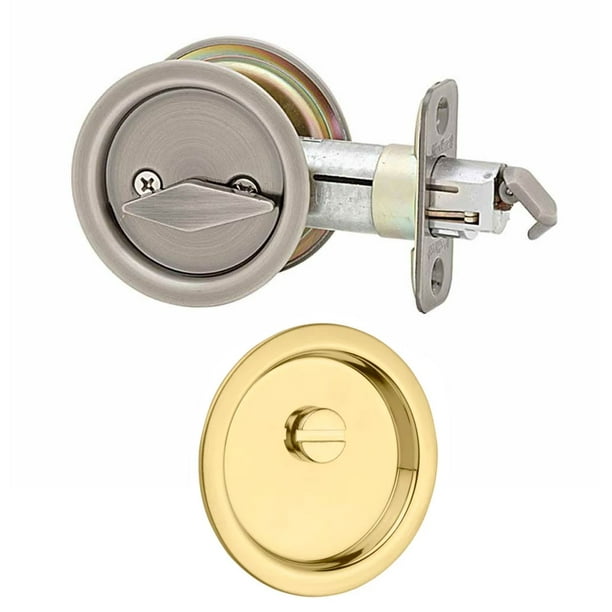
A Kwikset sliding door lock is hardware made only for pocket doors. These doors slide sideways into a wall cavity instead of swinging open. The lock sits in the edge of the door and includes a pull so you can grab the door when it is fully open. Kwikset offers two main styles. Round models look classic. Square models look modern. Both fit the same standard door preparation used in American construction.
The lock body is zinc. The latch uses a spring-loaded hook that grabs the strike plate on the jamb. Privacy versions add a turn piece on the room side. Passage versions stay free so anyone can open the door from either side. You will see these locks labeled 334 for passage and 335 for privacy. The letters SQT mean square trim and RDT or CNT mean round or contemporary.

How to Choose the Right Kwikset Sliding Door Lock
Start by measuring your door. Use a tape to check thickness at three spots along the edge. Write down the number. Next measure from the edge of the door to the center of the existing hole. That is the backset. Kwikset pocket locks use 2-3/8 inches. If your door is already drilled for a different size you may need a new door or a different brand.
Look at the face of the door. Round locks need a round hole. Square locks still fit the same 2-1/8 inch hole but the trim plate is square. Match the finish to other hardware in the room. Satin nickel, polished chrome, Venetian bronze, and matte black are the most common choices in American homes. All finishes carry the same lifetime warranty against peeling or fading under normal indoor use.
Tools and Materials You Need
You need only a few tools for a standard install. A Phillips screwdriver handles every screw. A tape measure confirms sizes. A pencil marks the strike location on the jamb. If the door has no holes yet you also need a hole saw for the 2-1/8 inch face bore and a 1 inch bit for the edge bore. Kwikset includes the template, screws, latch, and strike with most models.
Keep the door open and supported so it cannot swing or fall while you work. Clear the floor of rugs so screws do not roll away. Have a small container ready for the old hardware if you are replacing an existing lock.
Step by Step Installation for US Doors
First confirm the door is the right thickness and the holes match. If the door is already prepared, remove any old lock by unscrewing the face plates and sliding the latch out of the edge. Clean the hole of dust and paint chips so the new latch sits flush.
Insert the new latch into the edge bore. The curved or hook side must face the direction the door closes. Push until the face plate sits flush with the door edge. Secure it with the two short screws that come in the box. Do not overtighten. The latch should move freely when you press the spring tip.
Place one trim plate on each side of the door. The plates align with the cross bore. Feed the screws through the holes and tighten them evenly. Test the pull by sliding the door fully into the pocket and then drawing it back out. The spring tip should catch the strike so the door stays closed without locking.
For privacy models turn the button from the room side. The hook should engage the strike and hold. From the outside side insert the emergency tool into the small hole and turn. The door should open. If it binds, loosen the face screws a quarter turn and test again.
Finally install the strike plate on the jamb. Close the door gently and mark where the latch hits. Chisel a shallow recess if needed so the plate sits flush. Screw the plate in place with the longer screws. Open and close the door several times to make sure the hook lands in the center of the strike every time.
Common Problems and Easy Fixes
If the door will not stay closed the strike is usually out of line. Loosen the strike screws and move the plate a fraction of an inch up or down until the latch seats fully. If the turn button feels stiff the face screws may be too tight. Back them out a quarter turn and test again.
A latch that does not extend fully often means paint or debris is inside the edge bore. Remove the latch, clean the hole, and reinstall. If the door is too thick or too thin for the lock the trim plates will not sit flat. Measure again and choose a different model or add thin shims behind the plates.
Emergency release that does not work usually needs a longer tool. A straightened paperclip or the small key that ships with the lock should turn the mechanism. Never force it. Forcing can break the internal cam.
Maintenance Tips for Long Life
Wipe the finish with a soft cloth and mild soap every few months. Avoid harsh cleaners that can dull the coating. Once a year spray a small amount of graphite powder into the latch opening. Work the mechanism a few times so the powder coats the moving parts. Graphite stays dry and does not attract dust the way oil does.
Check the screws on the strike and face plates every six months. Wood can shrink or swell with the seasons in most parts of the United States. A loose screw lets the latch miss the strike. Tighten them snug but do not strip the wood. If the wood is soft use a longer screw or a wood filler first.
Keep the pocket cavity free of debris. Dust and small toys can block the door track and put extra stress on the lock. Vacuum the track once a year and the lock will keep working smoothly for decades.