

Quick Answer
Most office chairs can be repaired by tightening loose bolts, replacing worn casters, swapping the gas lift cylinder, and checking the tilt mechanism. If the base, frame, or seat plate is cracked, replacement is usually the safer and smarter choice.
I’m Ryan Mitchell, and I’ve spent years working on office chairs, desk setups, and everyday workspace gear. Most chair problems come from a few parts. In this guide, I’ll show you how to diagnose the issue fast, fix it safely, and decide when repair still makes sense.
About Ryan Mitchell: I test office furniture, ergonomic accessories, and practical repair tools so I can give simple advice that works in real home offices, company workspaces, and daily desk setups.
What Office Chair Repair Means and Why It Matters
Office chair repair means restoring the parts that wear out first. In most cases, that includes the casters, bolts, armrests, tilt controls, seat plate, and gas lift cylinder.
A good repair saves money. It also keeps a comfortable chair in service and helps prevent bad posture caused by a chair that sinks, wobbles, leans, or squeaks every time you move.
The most common office chair parts that fail
- Gas lift cylinder
- Caster wheels
- Seat plate and tilt mechanism
- Base
- Armrests and mounting screws
- Backrest brackets and recline lock parts
When repair is worth it and when it is not
Repair is usually worth it when the chair has a solid frame and only one failed part. A sinking chair, sticky wheels, loose armrests, or a squeaky tilt point are all common DIY fixes.
Repair is usually not worth it when the base is cracked, the seat plate is bent, the frame is damaged, or multiple major parts have failed at the same time. In those cases, replacement is safer and often cheaper in the long run.
How an Office Chair Works
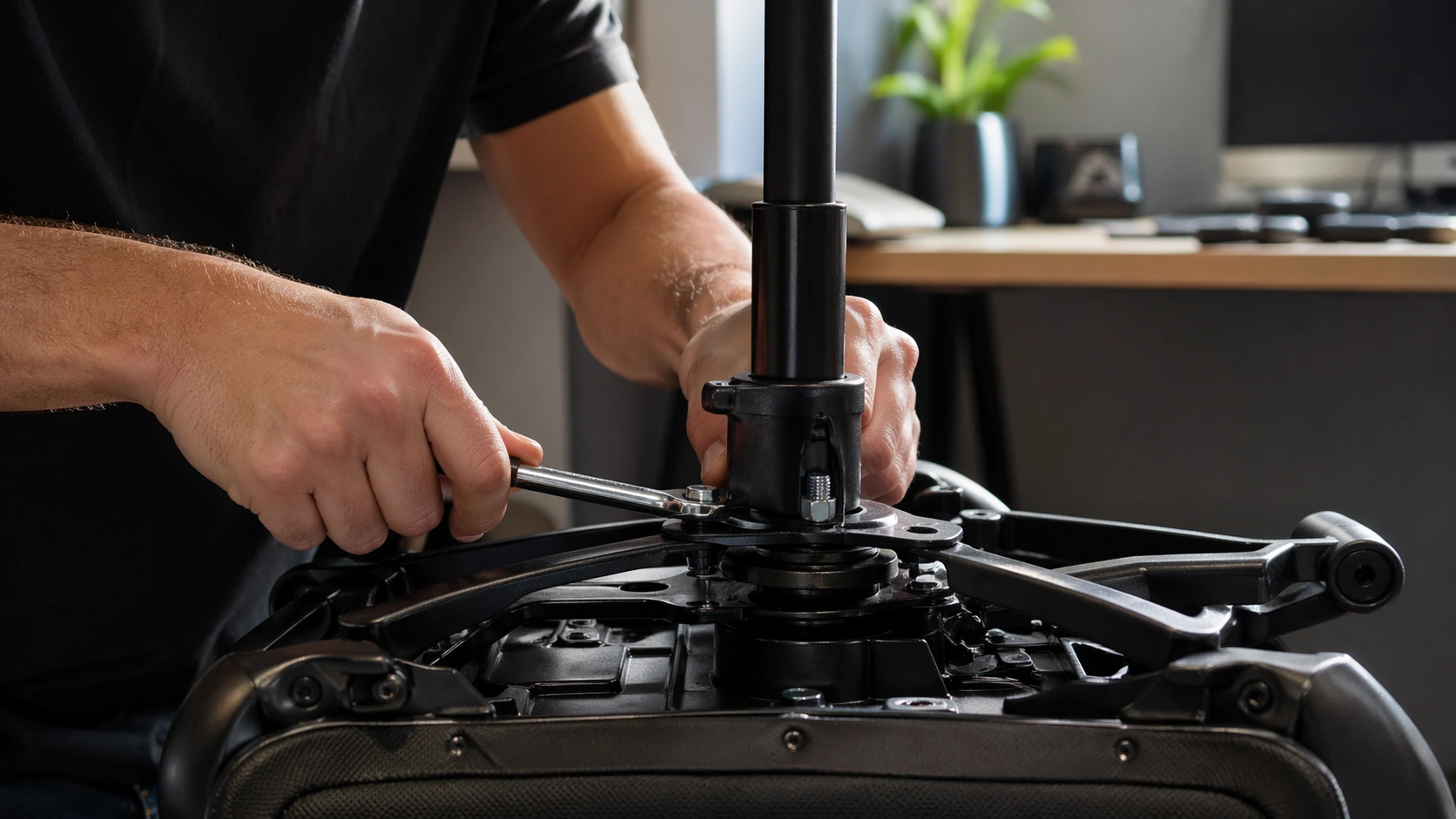
An office chair looks simple, but it relies on a few mechanical systems working together. Once you understand those systems, troubleshooting gets much easier.
How the gas lift cylinder raises and lowers the seat
The gas lift cylinder is the part that controls seat height. When you pull the height lever, it opens the cylinder valve and lets the seat move up or down. If the chair keeps sinking, the cylinder is usually worn out and needs replacement, not repair.
How the tilt mechanism, recline lock, and tension control work
The seat plate under the chair holds the tilt mechanism. This part manages recline movement, tilt lock, and tension. If the chair leans too far back, will not lock, or feels loose during movement, the problem is often in this assembly.
How casters, the base, and armrests affect stability
Casters affect how the chair rolls and tracks. The base keeps weight balanced across the chair. Armrests help support your body position. If one of these parts wears down or loosens, the whole chair can feel unstable.
For ergonomic fit and adjustment basics, I also like checking OSHA ergonomics guidance, along with brand resources from Herman Miller and Steelcase.
How to Repair an Office Chair (Step-by-Step)
1. Gather tools and replacement parts
Start with the basics before taking the chair apart.
- Allen keys
- Socket wrench
- Screwdrivers
- Rubber mallet
- Needle-nose pliers
- Silicone lubricant
- Cleaning cloth
- Replacement casters or gas lift cylinder if needed
2. Inspect the chair before taking anything apart
- Set the chair on a flat surface.
- Check for wobble, leaning, sinking, squeaking, and wheel drag.
- Flip the chair over carefully and inspect the base, casters, and seat plate.
- Look for cracks, bent metal, stripped screws, and loose bolts.
- Test the height lever and tilt lock to narrow down the failed part.
3. Tighten loose hardware and fix wobble
A loose office chair often feels worse than it really is. I always tighten every visible bolt before I assume a part is broken.
- Tighten the seat bolts first.
- Check armrest screws and backrest brackets.
- Inspect the seat plate mounting bolts.
- If a bolt keeps backing out, add a small amount of thread locker.
- If wobble remains after tightening, inspect the base or seat plate for wear.
4. Replace stuck or broken casters
If the chair does not roll smoothly, the wheels are often packed with hair, dust, or debris. Sometimes they are simply worn out.
- Pull each caster straight out from the base.
- Clean the socket and remove debris from the old wheel.
- Press in the new caster until it seats firmly.
- Repeat for all wheels so the chair rolls evenly.
5. Replace a sinking gas lift cylinder
This is one of the most common office chair repairs. It sounds difficult, but it is usually straightforward.
- Remove the base from the chair.
- Use a rubber mallet to loosen the old cylinder from the mechanism.
- Pull the old cylinder out of the base.
- Insert the new cylinder into the base.
- Reattach the seat and sit on the chair so the parts lock into place.
If your chair drops during the workday, this repair usually solves it. Temporary clamp fixes may hold for a while, but replacing the cylinder is the cleaner long-term fix.
6. Fix tilt, recline, and backrest problems
If the chair reclines unevenly, will not lock, or feels unstable when you lean back, inspect the seat plate and recline hardware.
- Check that the tilt lock lever moves freely.
- Tighten the seat plate bolts.
- Lubricate moving metal pivot points lightly.
- Replace the seat plate if the lock no longer holds or the mechanism is bent.
- Inspect the backrest bracket if the chair leans to one side.
7. Test the chair before daily use
- Raise and lower the seat several times.
- Roll the chair across the floor.
- Lean back slowly and test the tilt lock.
- Check for noise, instability, or uneven movement.
- Use the chair for a short session before returning it to full-time use.
Why Your Office Chair Keeps Sinking, Wobbling, or Squeaking

Most office chair problems trace back to one worn part. This table helps you match the symptom to the most likely fix.
| Problem | Likely Cause | Best Fix |
|---|---|---|
| Chair keeps sinking | Worn gas lift cylinder | Replace the cylinder |
| Chair wobbles side to side | Loose bolts, worn seat plate, or damaged base | Tighten hardware and inspect the base or mechanism |
| Chair leans to one side | Bent mechanism, damaged bracket, or cracked base | Replace the failed part |
| Wheels do not roll well | Debris buildup or worn casters | Clean or replace the casters |
| Chair squeaks when moving | Dry pivot points or loose fasteners | Tighten bolts and apply light lubricant |
| Backrest will not lock | Failing seat plate or recline lock assembly | Inspect and replace the tilt mechanism |
| Armrests feel loose | Loose screws or worn mounting points | Retighten or replace hardware |
Common Office Chair Repair Mistakes to Avoid
- Ignoring small cracks in the base or seat plate
- Ordering replacement parts before measuring the old ones
- Over-tightening screws into soft metal or plastic
- Lubricating fabric, mesh, or plastic instead of the moving metal joints
- Replacing only one caster when all wheels are worn
- Skipping a final stability test before daily use
Best Tools and Parts for Office Chair Repair
I keep the repair process simple. These are the tools and replacement parts I reach for most often.
| Tool or Part | Why It Helps | Best For |
|---|---|---|
| Allen key set | Tightens seat, backrest, and armrest bolts | Loose frame and wobble repairs |
| Socket wrench | Removes stubborn hardware | Seat plate and cylinder work |
| Rubber mallet | Helps separate tight parts without damaging them | Gas lift cylinder replacement |
| Silicone lubricant | Reduces friction and noise | Squeaks and stiff movement |
| Replacement casters | Restore smooth rolling | Sticky or broken wheels |
| Universal gas lift cylinder | Restores seat height adjustment | Sinking chair repair |
| Thread locker | Helps keep bolts from loosening again | High-use office chairs |
Universal Office Chair Gas Lift Cylinder Replacement
Best for fixing a chair that slowly sinks or refuses to hold the right height.
Rollerblade Style Office Chair Caster Wheels
Great for smoother movement, quieter rolling, and replacing cracked or sticky wheels.
Office Chair Repair Tool Kit
A simple kit with hex keys and hand tools makes routine tightening and part swaps much easier.
Office Chair Repair vs Replacement vs Professional Help: Full Comparison
Not every chair deserves a repair. This table makes the decision easier.
| Option | Best When | Cost Level | Time | Downside |
|---|---|---|---|---|
| DIY Repair | Only one or two parts have failed | Low to medium | Short to moderate | You need the right tools and basic confidence |
| Professional Help | The chair is high-end or the issue is harder to diagnose | Medium to high | Moderate | Labor cost can approach replacement value |
| Replace the Chair | The base, frame, or seat plate is damaged, or several parts are worn out | Medium to high | Fast once purchased | Higher upfront spend |
What works best for a home office setup?
For most home office setups, I recommend repair when the chair has a strong frame and one obvious failed part. A sinking chair, worn casters, or loose armrests are usually worth fixing. If the chair is low quality and multiple parts are failing, replacement is usually the better long-term move.
Pro Tips to Make Your Repair Last Longer
- Clean hair and dust out of the casters regularly
- Retighten high-use bolts every few months
- Use a chair mat if your floor surface creates extra wheel drag
- Measure old parts before ordering replacements
- Replace worn parts early before they damage nearby components
- Do not ignore new wobble, because it often gets worse fast
FAQ
Can you repair a sinking office chair?
Yes. The proper fix is usually to replace the gas lift cylinder. Temporary clamp or sleeve hacks may help for a while, but they do not solve the root problem.
Why does my office chair lean to one side?
A chair usually leans because the base, seat plate, or backrest bracket is worn, bent, or loose. Start by tightening everything, then inspect for damage.
Is it worth fixing an office chair?
It is worth fixing when the frame is solid and the failed part is easy to replace. It is usually not worth it when the chair has structural cracks or several major failures.
How do you stop office chair wheels from sticking?
Remove the casters, clean out hair and debris, and replace the wheels if they still drag. Worn wheels rarely improve for long after cleaning alone.
Can you replace the hydraulic cylinder on any office chair?
Many office chairs can use a universal replacement cylinder, but you still need to confirm fit before buying. Measure the existing part and compare the mounting style.
When should you replace instead of repair an office chair?
You should replace the chair when the base is cracked, the frame is damaged, the mechanism is unsafe, or repair costs start getting too close to the value of a new chair.
Conclusion
Most office chair repairs are simpler than they look. Start with the symptom, identify the failed part, and fix the basics first. Wheels, bolts, and gas lift cylinders are common problems. If the structure is damaged, skip the repair and move straight to replacement. Diagnose first, buy second, and your workspace will stay more comfortable for longer.