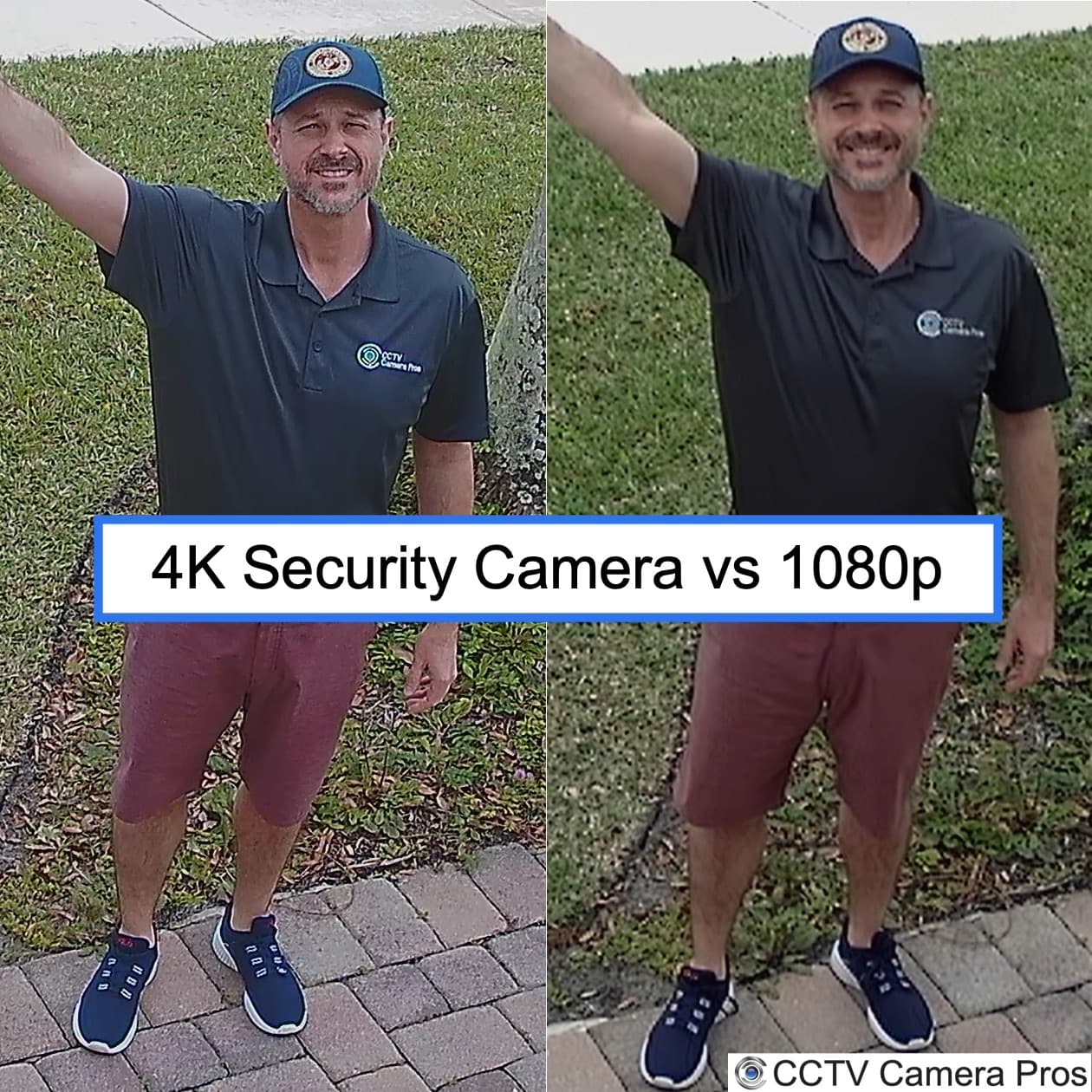
For most U.S. homes, 2K is a strong middle-ground choice, 1080p is usually enough for close indoor or entryway monitoring, and 4K is most useful when you need more detail across large outdoor areas or want more usable detail when digitally zooming recorded footage.
If you are comparing security cameras for a home in the United States, the choice between 1080p, 2K, and 4K should depend on what you need the camera to capture, not simply which resolution has the biggest number. A camera covering a small apartment entryway has very different requirements from one watching a long driveway, backyard, detached garage, or large suburban property.
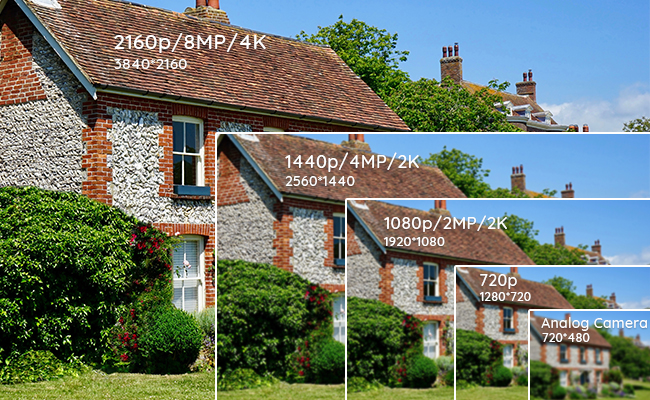
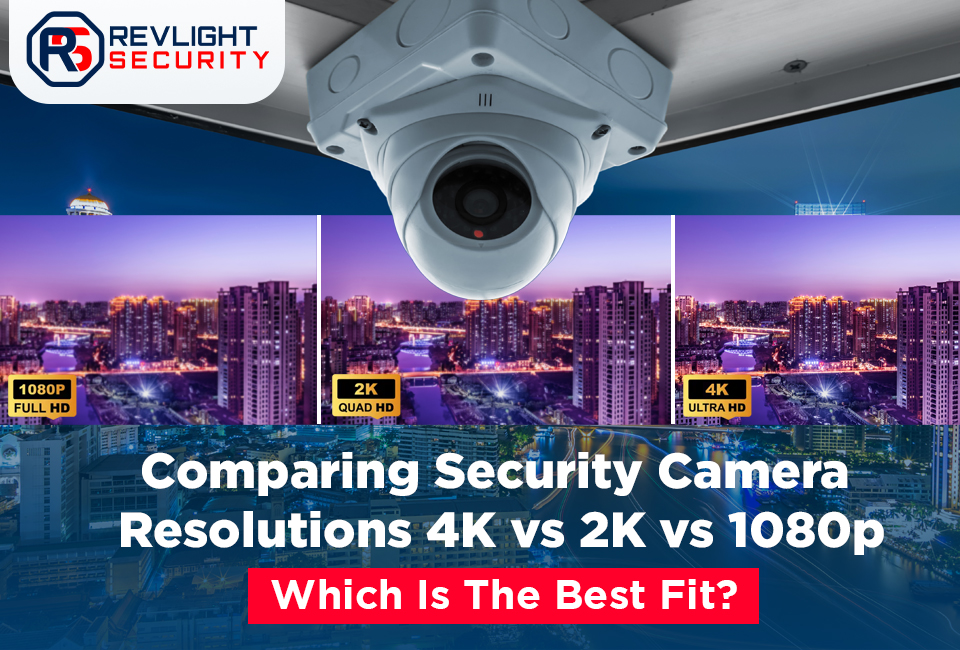
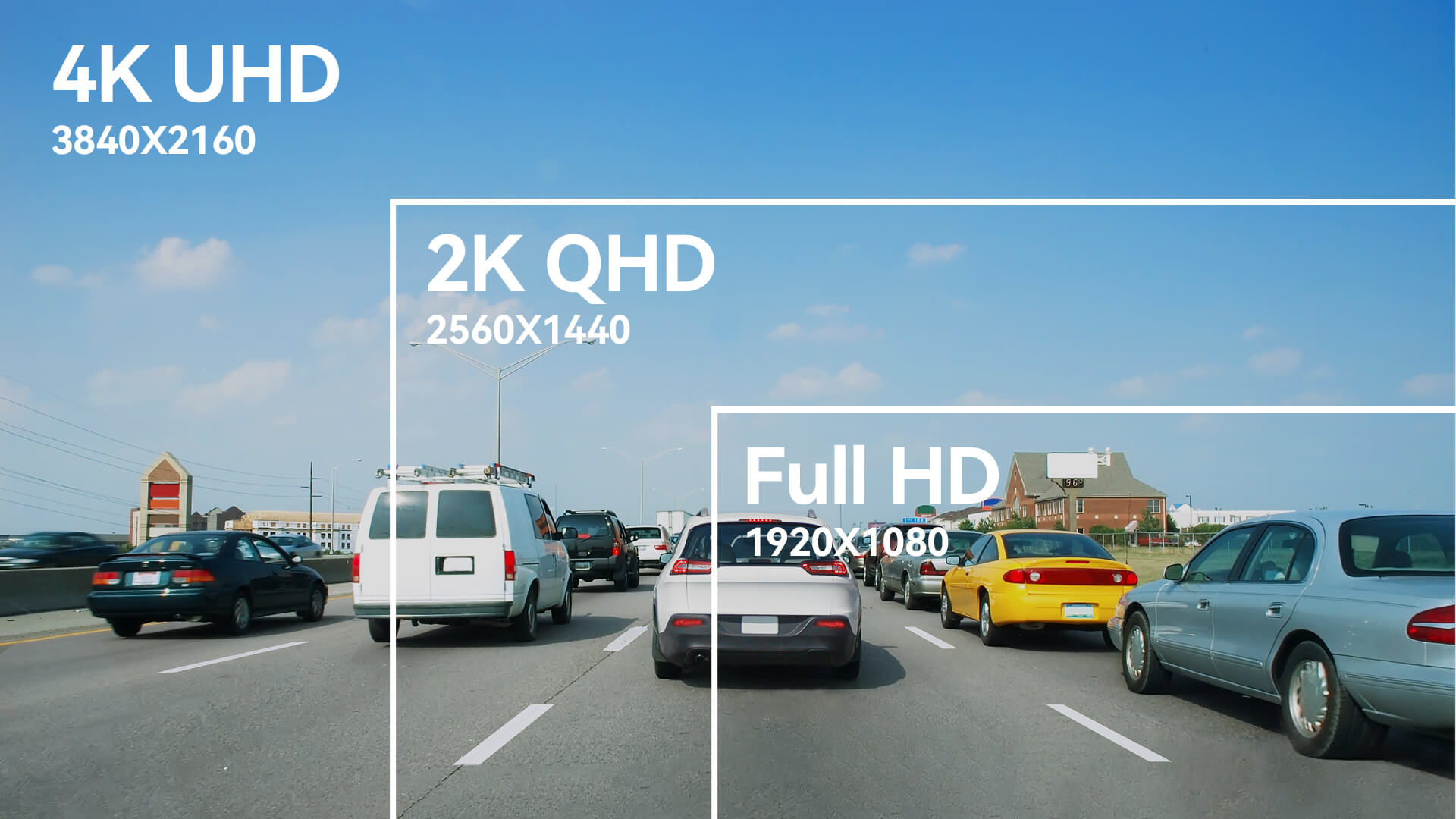
Resolution describes how many pixels make up the recorded image. A typical 1080p camera records at 1920 by 1080 pixels, while consumer cameras marketed as 2K commonly use 2560 by 1440 pixels. A typical 4K UHD security camera records at 3840 by 2160 pixels. That means 4K contains roughly four times as many pixels as 1080p, but it does not automatically produce four times the useful security information.
Lens quality, sensor performance, field of view, lighting, motion, compression, camera placement, and the distance between the camera and subject can all affect whether a face, license plate, package label, or other small detail is actually usable. The most sensible approach is therefore to match resolution to the surveillance task and environment.
Source: reolink.com
What Do 1080p, 2K, and 4K Mean?
The labels 1080p, 2K, and 4K describe image resolution, which is the number of pixels used to form each video frame. More pixels can preserve more fine detail, particularly when the subject occupies a meaningful portion of the frame.
1080p is commonly called Full HD and uses 1920 by 1080 pixels, or about 2.07 million pixels per frame. It remains a common resolution for indoor cameras, basic outdoor cameras, and systems where storage and bandwidth need to remain modest.
In consumer security-camera listings, 2K commonly refers to 2560 by 1440 pixels, also called 1440p or QHD. That format contains about 3.69 million pixels, roughly 78 percent more pixels than 1080p.
4K UHD normally refers to 3840 by 2160 pixels, or about 8.29 million pixels. That is approximately four times the total pixel count of 1080p and more than twice the pixel count of common 2K 1440p footage.
One complication is that the term 2K is not perfectly standardized in consumer marketing. Some products use the term for different dimensions, so checking the actual recorded resolution is more reliable than relying on the label alone.
Source: www.youtube.com > Security.org
1080p
Typical resolution is 1920 by 1080 pixels, or about 2.1 megapixels. It is well suited to close and moderate viewing distances where general activity and recognizable subjects are the main goals.
2K
A common consumer format is 2560 by 1440 pixels, or about 3.7 megapixels. It provides more detail than 1080p while generally requiring fewer resources than 4K.
4K
Typical UHD resolution is 3840 by 2160 pixels, or about 8.3 megapixels. It provides substantially more pixel information for wide views and detailed inspection.
Why Pixel Count Is Not the Same as Security Performance
A higher pixel count gives a camera more potential detail, but the camera must actually capture and preserve that detail. If a person is very small in a wide frame, increasing resolution may help, but it cannot compensate for an unsuitable lens, extreme darkness, heavy motion blur, or aggressive video compression.
For example, a 4K camera pointed across a very large yard may still produce an unusable face if the person occupies only a tiny portion of the image. A lower-resolution camera with a tighter field of view and better placement can sometimes produce more useful footage for the specific task.
Look beyond the resolution label
Check the sensor, lens, field of view, frame rate, low-light performance, infrared capability, bitrate, and recording method before deciding that one camera is automatically better.
1080p vs 2K vs 4K Security Camera Comparison
The simplest way to compare these three options is to look at their pixel dimensions, relative detail, resource requirements, and typical home-security applications. None of the categories is automatically right for every U.S. property.
1080p usually has the lowest storage and bandwidth demand of the three. It can be a sensible choice when the camera is positioned close to the area of interest, such as a small room, hallway, apartment entrance, or compact porch.
2K offers a noticeable increase in pixel count while remaining below 4K. For many homeowners, that makes it a useful compromise for front doors, garages, driveways, and outdoor areas where 1080p may not provide enough detail but 4K would add more storage and network requirements than necessary.
4K has the highest pixel count among these three common choices. It can be particularly useful when a single camera must cover a broad area and you expect to crop or digitally zoom into recorded footage. However, the value of 4K depends heavily on camera placement and the quality of the rest of the imaging system.
1080p is often sufficient for small indoor spaces and nearby entry points where the subject remains relatively large in the frame.
Best balance for many homes
2K can provide a practical middle ground between image detail, storage requirements, network load, and purchase cost.
Best for demanding detail needs
4K is more appropriate when wide coverage, distant subjects, or greater flexibility for cropping recorded footage are important.
1080p vs 2K
The jump from 1080p to common 2K 1440p increases total pixel count from about 2.07 million to about 3.69 million. That extra information can make faces, clothing details, objects, and other features easier to inspect, especially when the subject is not close to the camera.
The difference is most useful when the camera’s field of view, lens, lighting, and placement already make sense for the area being monitored. If the camera is poorly positioned, the additional pixels will not solve the underlying problem.
Choose 2K over 1080p when
You want more detail for a porch, driveway, garage, backyard, or other moderate-sized area and can accept somewhat greater storage and bandwidth requirements.
2K vs 4K
Moving from common 2K 2560 by 1440 footage to 4K 3840 by 2160 roughly doubles the total pixel count. The additional pixels can be useful for large scenes and for examining smaller portions of recorded footage.
The trade-off is that 4K video can require more storage, processing capacity, and network bandwidth. The difference becomes especially relevant when several cameras record continuously or when recordings are stored locally for long periods.
Choose 4K over 2K when
The camera needs to cover a larger area, distant details matter, or you expect to crop recordings and still want substantial image information.
Which Security Camera Resolution Is Best for Different Areas?
The best resolution depends on the area being monitored and the smallest detail you expect to identify. A useful way to choose is to start with the task, then select the resolution, lens, and placement that support that task.
For a small indoor room, 1080p can often provide enough information to see movement and recognize people who are reasonably close to the camera. Increasing to 2K may provide more flexibility for cropping, while 4K may be unnecessary unless the room is unusually large or detailed inspection is important.
For a front door or porch, 2K can be a sensible middle-ground option. These locations often require more detail than a small indoor room because visitors may stand farther away and the camera may need to cover both the entrance and surrounding approach.
For a long driveway, large backyard, detached garage, or wide property, 4K becomes more attractive because the subject can occupy a smaller portion of the frame. Even then, the lens and camera placement should be selected for the actual distance and viewing angle.
For license plates, resolution alone cannot guarantee readable plates. Vehicle speed, distance, plate angle, exposure, lighting, motion blur, compression, and the camera’s lens and shutter settings can all affect the result. A camera designed and positioned specifically for plate capture may be more appropriate than simply choosing the highest advertised resolution.
Source: storage.googleapis.com
Small indoor room
1080p is often sufficient when subjects remain relatively close and the goal is general monitoring.
Apartment or home entry
1080p can work for close views, while 2K offers more detail when the camera covers a larger approach.
Driveway
2K is a practical starting point for many driveways, while 4K can be useful when the driveway is long or wide.
Large backyard or property
4K can provide more useful pixels across a broad scene, but multiple appropriately positioned cameras may outperform one extremely wide 4K view.
Vehicle or plate monitoring
Prioritize the correct lens, mounting position, shutter behavior, exposure, lighting, and target distance in addition to resolution.
One 4K Camera or Multiple Lower-Resolution Cameras?
A common mistake is assuming that one high-resolution camera is always better than several lower-resolution cameras. Coverage matters as much as pixel count. A single camera may have to use a very wide field of view, making people and objects smaller in the image.
For a large U.S. property, strategically placed cameras can reduce blind spots and keep important areas closer to the center of the frame. Depending on the property layout, two well-positioned 2K cameras can be more useful than one 4K camera trying to cover everything.
Prioritize coverage first
Make sure entrances, approaches, gates, driveways, and other important areas are actually visible before paying extra for resolution.
How Resolution Affects Storage and Bandwidth
Higher resolution generally means more image data must be processed, transmitted, and stored, although the exact difference depends on compression, codec, frame rate, bitrate, recording mode, and camera settings. Resolution should therefore be considered alongside the entire recording system.
A 4K camera has about four times as many pixels per frame as 1080p. That does not mean every 4K camera automatically uses exactly four times the storage because video codecs and bitrate settings determine the size of the resulting files. Some cameras also use efficient compression to reduce data requirements.
Cloud-connected cameras can make bandwidth especially relevant because video may travel from the camera to a cloud service. Local recording to an SD card, NVR, or other storage system changes the network requirements, but the system still needs sufficient capacity to record and retain the footage.
Source: infoupdate.org
1080p
Generally the easiest of these three resolutions to store and transmit, making it attractive for systems with limited storage or network capacity.
2K
Uses more image data than 1080p but can provide a useful increase in detail without moving all the way to 4K.
4K
Can require substantially more storage and processing capacity, particularly with continuous recording and multiple cameras.
A Simple Storage Example
Consider this hypothetical example: a camera system is configured at a higher bitrate for 24-hour continuous recording. If the bitrate is doubled, the approximate amount of recorded data generated over the same period also doubles, assuming other conditions remain constant. This illustrates why bitrate is often more useful for estimating storage than resolution alone.
For a real installation, check the camera’s stated bitrate range, codec, frame rate, recording schedule, retention target, and whether the system records continuously or only when motion or another event is detected.
Check before buying
Verify the recorder capacity, supported camera resolution, maximum storage size, network capacity, cloud retention rules, and expected recording schedule.
Does Higher Resolution Mean Better Night Vision?
No. A 4K security camera can produce more daytime detail than a 1080p camera, but resolution alone does not determine nighttime image quality. After dark, sensor sensitivity, lens aperture, infrared illumination, exposure settings, image processing, ambient light, and motion all become important.
If a camera produces a noisy, dark, or motion-blurred image at night, moving from 2K to 4K may not solve the problem. In some camera designs, fitting more pixels onto a similarly sized sensor can create smaller individual pixels, which may affect light collection. The actual sensor design and image processing matter more than the resolution label by itself.
For a front porch, driveway, or backyard, compare actual nighttime sample footage from the specific camera model whenever possible. Look for faces at the distances that matter to you rather than judging night performance from daytime promotional images.
Source: fdssecuritycameras.com
Check infrared range
If the camera relies on infrared illumination, verify that its practical nighttime coverage matches the area you need to monitor.
Check low-light performance
Look at real nighttime footage and specifications for the sensor and low-light capabilities rather than assuming 4K automatically means better night video.
Watch for motion blur
A moving person or vehicle can become difficult to identify when exposure settings prioritize brightness over motion freezing.
Why Lighting Can Matter More Than Resolution
Imagine two cameras watching the same driveway. One records at 4K but has poor nighttime illumination and significant motion blur. The other records at 2K with better lighting and a suitable lens. The second camera may produce more useful evidence because the subject is captured with better contrast and less blur.
This is why a sensible security-camera comparison should consider resolution together with lighting, lens selection, sensor quality, camera placement, and the distance to the target.
Practical rule
Choose the camera that can produce usable footage under the actual lighting and distance conditions at the location, not simply the camera with the highest pixel count.
How to Choose Between 1080p, 2K, and 4K
Start by deciding what you need the camera to accomplish. If you mainly want to know whether someone entered a room or approached a nearby door, 1080p may be sufficient. If you want more detail around a porch or driveway without moving to the highest-resolution option, 2K is often a sensible choice. If you need to cover a large area or retain more detail for later inspection, 4K may be worth the additional system requirements.
Next, estimate the distance between the camera and the area where important events are likely to occur. Resolution becomes more valuable as the subject occupies a smaller portion of the image, but a tighter lens or better placement may sometimes provide a bigger improvement than simply increasing resolution.
Then consider your recording system. Confirm that the NVR, DVR, SD card, cloud service, Wi-Fi network, Ethernet infrastructure, and storage capacity can support the camera’s resolution and bitrate. A high-resolution camera that overwhelms the recording system or network is not a useful upgrade.
Finally, evaluate nighttime performance. Review footage at the actual mounting location if possible. Pay particular attention to faces, vehicles, and other details you may need to identify after dark.
Source: creator.warbirds-online.org
Choose 1080p if
You are monitoring a small or close area, want lower storage and bandwidth requirements, or have a limited budget and do not need extensive digital cropping.
Choose 2K if
You want a meaningful improvement over 1080p for typical home outdoor areas and want a middle ground between detail and resource requirements.
Choose 4K if
You need more detail across a wide scene, expect to crop recorded footage, or are monitoring a larger property where additional pixels can be useful.
A Practical Decision Checklist
Before buying a camera, write down the area you want to cover, the approximate distance to important subjects, whether you need daytime or nighttime identification, how long recordings should be retained, and whether the system uses local or cloud storage.
Use those requirements to compare cameras rather than starting with the resolution number. This reduces the risk of paying for 4K when the real limitation is camera placement, or choosing 1080p when the scene is too large for the available pixel density.
Step 1
Identify the most important target area and the details you need to see.
Step 2
Estimate the distance from the camera to the target and choose an appropriate field of view.
Step 3
Compare 1080p, 2K, and 4K models that fit the required viewing distance.
Confirm that the complete camera system supports the chosen resolution and recording configuration.
Common Mistakes When Comparing Security Camera Resolution
The biggest mistake is treating resolution as the only specification that matters. Security footage is useful only when the complete imaging system can capture the required detail under the conditions where an event might occur.
Another common mistake is assuming that a wider field of view is always better. A wide image can cover more property, but it also makes each person or object occupy fewer pixels. If identification is important, the camera may need a narrower view or additional cameras.
Buyers also sometimes compare megapixel numbers without checking whether the camera actually records at that resolution under their chosen settings. Some cameras offer multiple recording modes, frame rates, or compression options, so the maximum specification may not represent the configuration you will use every day.
Finally, avoid assuming that digital zoom creates new detail. Digital zoom enlarges the pixels already present in the recording. A higher-resolution source can give you more information to work with, but no digital zoom setting can recover detail that the camera never captured.
Mistake: buying the highest resolution automatically
More pixels can help, but a camera should be matched to the target distance, field of view, lighting, and recording system.
Mistake: ignoring the lens
The lens determines how the available pixels are distributed across the scene and can strongly affect useful detail.
Mistake: judging only daytime footage
Nighttime lighting, infrared performance, motion, and exposure can change the practical quality of security footage.
Mistake: assuming digital zoom restores detail
Digital zoom enlarges existing information. It does not recreate missing facial features, plate characters, or other fine details.
Mistake: forgetting storage
Higher-resolution continuous recording can increase storage and processing requirements, so confirm system capacity before upgrading.
When 4K Is Not Worth the Extra Cost
4K may be unnecessary when the camera is mounted close to the target, the monitored area is small, the recording system has limited capacity, or the main objective is simply detecting activity. In those situations, spending more on better placement, lighting, or additional coverage may provide a larger practical benefit.
The reverse is also true. Choosing 1080p solely to save money can be a false economy if the camera must monitor a long driveway or wide outdoor area and the resulting footage does not contain enough useful detail.
Think in terms of useful pixels
The important question is not only how many pixels the camera records, but how many useful pixels fall on the person, vehicle, doorway, or other target you care about.
Frequently Asked Questions
Q
Is 1080p good enough for a security camera?
Yes, 1080p can be good enough for many security-camera applications. It is often suitable for small rooms, hallways, nearby entryways, and other locations where the subject remains relatively close to the camera. If you need to inspect distant faces or small objects across a large area, 2K or 4K may provide more useful detail.
Q
Is 2K better than 1080p for security cameras?
Common 2K 2560 by 1440 cameras capture more total pixels than 1080p 1920 by 1080 cameras, so they can preserve more fine detail. The improvement is most useful when the camera covers a moderate-sized area or when you expect to crop recorded footage. The exact benefit still depends on the camera’s lens, sensor, lighting, compression, and placement.
Q
Is 4K worth it for home security cameras?
4K can be worth it when you need detailed footage across a large area, want more flexibility for cropping, or need to inspect small details in recorded video. It may not be worth the additional storage, bandwidth, and system requirements for small rooms or close-range monitoring.
Q
Does 4K security camera use more storage than 1080p?
Generally, yes, but there is no universal storage multiplier based on resolution alone. Actual storage depends on bitrate, codec, frame rate, recording schedule, compression, and whether the camera records continuously or only during events. Because 4K contains about four times as many pixels as 1080p, it can require substantially more data when other settings are comparable.
Q
Can 4K security cameras see better at night than 1080p cameras?
Not necessarily. Resolution and nighttime performance are separate characteristics. A 4K camera can have more daytime detail while producing poor nighttime footage if its sensor, lens, infrared illumination, exposure, or image processing is weak. Compare actual low-light performance rather than assuming the highest resolution will automatically be best after dark.
Q
What is the best security camera resolution for a driveway?
For many residential driveways, 2K is a reasonable starting point because it provides more detail than 1080p without the full resource requirements of 4K. A long or wide driveway may benefit from 4K, especially when distant details matter. The lens, mounting position, lighting, and vehicle distance are equally important.
✦ Wrapping Up
Conclusion
The best choice in the 1080p vs 2K vs 4K security camera comparison depends on the job the camera needs to perform. 1080p remains a practical option for close-range and basic monitoring, 2K provides a useful balance for many residential applications, and 4K offers substantially more pixel information for large scenes and detailed inspection.
For a typical U.S. home, start by examining the area you need to monitor, the distance to important subjects, the expected lighting, and the recording system. Do not choose a camera based on resolution alone. A well-positioned 2K camera can be more useful than a poorly positioned 4K camera, while a 1080p camera may be perfectly adequate when the monitored area is small and close.
If identification of faces, license plates, or other fine details is critical, pay particular attention to lens selection, target distance, lighting, motion, field of view, and actual recorded footage. Resolution provides the potential for detail, but the complete camera setup determines how much of that potential becomes useful security evidence.
💡 Key Takeaway
Choose 1080p for close and basic monitoring, 2K for a balanced residential setup, and 4K when large coverage areas or detailed recorded footage justify the additional storage and bandwidth. Before buying, compare the camera’s real field of view and nighttime performance at the distance where you need important details to remain visible.
I’m Ethan Carter, a home security systems specialist at Diggons.com. I focus on modern surveillance solutions and smart protection technologies that help people keep their homes safe and secure.
I have hands-on experience working with security cameras, video doorbells, alarm systems, and motion detection devices. I test real products and explore practical setups so I can provide clear, easy-to-follow guidance for everyday users.
My goal is to simplify home security by helping you understand how these systems work, how to fix common issues, and how to choose the right products with confidence. At Diggons.com, I share honest insights, comparisons, and real-world advice to make home security easier and more effective.